About Samisti Legal 

A deep engagement to safe-guarding client’s commercial intent, hands-on approach, cross-functional expertise and experience across legal, secretarial, regulatory institutions makes Samisti legal a leading corporate legal advisory firm in Hyderabad.From transactional advisory for corporate mergers & acquisitions to an ongoing regulatory representations, fundraising, employment & labour law advisory to advising on strategic directions to navigate the myriad corporate laws, Samisti legal is trusted by several leading corporates.

Location

Hyderabad

Number of Vacancies

One

Eligibility

  • The candidate must have a Law Degree
  • 1-5 years of PQE

How to Apply?

Interested individuals can share resume at prashant@samistilegal.in / anita@samistilegal.in.

Disclaimer: All information posted by us on LexPeeps is true to our knowledge. But still it is suggested that you check and confirm things on your level.

WhatsApp Group:

https://chat.whatsapp.com/GRdQLsHRwmB7QVRmS3WK

Telegram:

https://t.me/lexpeeps

LinkedIn:

https://www.linkedin.com/company/lexpeeps-in-lexpeeps-pvt-ltd

About The Trust

Aims to promote welfare, social,cultural, charitable, health, education, humanitarian and relief activities that will protect, safeguard, improve the quality and raise the standard of human life, particularly for economically weaker sections of the society.

Eligibility

Law Student (any semester) and Law graduates

Perks

  1. Certificate of Internship
  2. Letter of Recommendation
  3. Court Vists
  4. Publication Opportunity

Duration

1 to 3 months

Location

Jaipur, Rajasthan

Stipend

No

How To Apply?

Send CV at asgarkhanadvcharitabletrust@gmail.com

Contact

Phone number: 9461239898/6367091920

Disclaimer: All information posted by us on LexPeeps is true to our knowledge. But still it is suggested that you check and confirm things on your level.

WhatsApp Group:

https://chat.whatsapp.com/GRdQLsHRwmB7QVRmS3WK

Telegram:

https://t.me/lexpeeps

LinkedIn:

https://www.linkedin.com/company/lexpeeps-in-lexpeeps-pvt-ltd

About Bhandari Law firm

Expert in Civil, criminal, Consumer, Matrimonial, RERA, Service matters, District courts of Chandigarh.

Duration

April and may 2022

Location

Chandigarh

How to Apply?

Drop your CV at info@bhandarilawfirm.com.

Disclaimer: All information posted by us on LexPeeps is true to our knowledge. But still it is suggested that you check and confirm things on your level.

WhatsApp Group:

https://chat.whatsapp.com/GRdQLsHRwmB7QVRmS3WK

Telegram:

https://t.me/lexpeeps

LinkedIn:

https://www.linkedin.com/company/lexpeeps-in-lexpeeps-pvt-ltd

About IN10 Media Network

IN10 Media Network is a network with a plethora of offerings across the Media & Entertainment sector. With deeply entrenched roots in the creative community and a long-standing association with premium content, the verticals in its fold include Linear Broadcast: EPIC TV, ISHARA, ShowBox, Filamchi; Digital: EPIC On, DocuBay, Latestly; Production: Juggernaut Productions, the brands cover every aspect of the content life-cycle across platforms.

About Internship at IN10 Media Network

We at IN10 Media Network are looking for interns to join our in-house legal team on an immediate basis.

Requirements

1. Must demonstrate prior internship in the media and entertainment arena
2. Willing to dedicate 3-6 months for the internship.
3. Willing to attend our Mumbai office.
4. Excited to learn and work in a fast-paced environment.

Application Procedure

Candidates who fit the above-mentioned criteria may write to us with their SOPs and resumes at shreya.deb@in10media.com / nitika.nagar@in10media.com and keep hr@in10media.com in cc. Selected candidates will be contacted via email / call for further discussion.

Disclaimer: All information posted by us on LexPeeps is true to our knowledge. But still it is suggested that you check and confirm things on your level.

WhatsApp Group:

https://chat.whatsapp.com/GRdQLsHRwmB7QVRmS3WK

Telegram:

https://t.me/lexpeeps

LinkedIn:

https://www.linkedin.com/company/lexpeeps-in-lexpeeps-pvt-ltd

The need for interpretation only arises when the wording of the legal provisions is ambiguous, if it is not clear, if two views are possible, or if the meaning of the provisions is different from the subject of the legislation. If the language is clear and clear, no interpretation is needed to develop.

INTRODUCTION

The dictionary definition of interpretation is “the act of trying to make sense of something.” In a legal context, interpretation refers to the process of understanding and comprehending a statute’s intent. The word “interpretation” comes from the Latin word “interpretari,” which means “to explain or translate.” The basic goal of interpreting a statute is to figure out what the law’s intent is.

The goal of statutory interpretation is to identify the legislature’s objective, which is expressed either explicitly or implicitly in the wording used. “By interpretation or construction,” SALMOND explains, “we mean the process by which courts seek to discern the meaning of the legislation through the channel of authoritative shapes in which it is written.”
The art of interpretation is as old as language itself. Even from the earliest stages of Hindu civilization and culture, complex norms of interpretation were developed. Various ancient textbooks emphasized the necessity of evading literal interpretation – “Merely following the wording of the law, decisions are not to be delivered, for, if any such decisions are lacking in equity, a major failure of Dharma is caused.”

As a result, interpretation is a well-known and important activity. Because of the intrinsic character of legislation as a source of law, interpretation is critical in connection to statute law. The process of enacting legislation and the process of interpreting legislation are two separate operations.

Several aids are employed in the interpreting process. They might be either statutory or non-statutory in nature.
Non-statutory aids are illustrated by common law rules of interpretation (along with certain suppositions relating to interpretation) and case laws relating to the interpretation of statutes, whereas statutory aids are demonstrated by the General Clauses Act, 1897, and specific definitions contained in individual Acts.

MEANING OF THE GOLDEN RULE

“The grammatical and ordinary perception of the words is to be abided to unless that would lead to some absurdity, repulsion, or lack of consistency with the rest of the instrument, in which particular instance the ordinary meaning sense of the words may be altered so as to prevent the absurdity and inconsistency, but no further,” said Lord Wensleydale in the Grey v Pearson case (1857).

As a result, it is a departure from the literal rule of interpretation. The literal rule emphasizes the literal interpretation of legal terms or terms used in a legal context, which can frequently result in ambiguity and absurdity. The golden rule aims to prevent unusual and absurd consequences from literal interpretation. As a result, the grammatical meaning of these words is frequently altered.

The court is usually concerned with delivering justice, and the golden rule is typically applied in order to anticipate the repercussions of their rulings. Because the technical and grammatical meanings of the law may not be sufficient, this rule of interpretation tries to give effect to the law’s spirit.

The terms of a statute must be accorded their ordinary meaning prima facie according to the Golden Rule since when the meaning of a word is clear, it is not the role of the courts to get involved in the alleged purpose. When grammatical interpretation results in absurdity, however, it is permitted to depart from and interpret statutes in a way that eliminates the absurdity.

When presented with multiple plausible interpretations of an enactment, the court has the authority to analyze the outcome of every interpretation in order to determine the genuine meaning of the legislature. The golden rule does not provide a clear way to determine whether or not an absurdity exists.

In a nutshell, it is an interpretation that will give effect to the legislative intent when the words themselves become confusing, as a result of modifying the language employed. On the surface, this rule appears to be the “Golden Rule,” as it appears to solve all difficulties. This strategy is also known as the altering method of interpretation because the literal meaning is altered to a certain extent. As a result of this rule, the implications or effects of an interpretation are given far more weight because they provide clues to the underlying meaning of a law.

There are two ways to apply the golden rule:

Narrow Technique– When a word or phrase has far more than one literal meaning, this approach is used. As a result, the judge is able to utilize the meaning in a way that avoids absurdity.

Broad Technique– Whenever there is just one literal meaning, this approach is used. However, using just one literal definition would be ludicrous. The court will change the meaning in this case to prevent the absurdity. The change will be made with the objective of the Parliament in enacting the law in this case in mind.

IMPORTANCE OF INTERPRETATION

The term “interpretation” refers to determining the relevance of something, as well as determining an explanation for something that isn’t immediately clear. The process of drafting and interpreting a statute is as old as language itself.
The process of determining the actual meaning of the words used in a statute is known as statutory interpretation.
There is little need for interpretation rules when the statute’s text is clear. However, in some instances, the very same word or phrase might have many meanings. As a result, it is required to interpret the statute in order to determine its true objective.

From Heydon’s Case in 1854, statute interpretation has been an important component of English law, and while it may appear complicated, the key rules employed in interpretation are simple to understand. Even from the earliest stages of Hindu civilization and culture, complex norms of interpretation were developed. The guidelines offered by ‘Jaimini,’ the author of the Mimamsat Sutras, which were originally intended for srutis, were also used to interpret Smritis.
The concept of statutory interpretation cannot remain static. As new facts and circumstances emerge, interpreting statutes becomes a never-ending process.

Wherever the language of written law is unclear, not clear, or when two interpretations are available, or when the provision offers a different meaning, contradicting the purpose of the act, would there be a need for interpretation? There would be no need for interpretation if the language was clear and unambiguous.

IMPORTANCE OF GOLDEN RULE INTERPRETATION

When the meaning of a law can lead to absurdity or defeat the purposes of the enactment, it becomes the Court’s obligation to give effect to that interpretation. The law asks the court to go to the point of changing the meaning of terms in both the grammatical and common senses on occasion.

The court will not take a path that contradicts a provision of a law whose meaning appears to be relatively clear and obvious on the surface. This does not, however, imply that a law might be rewritten. It has to be possible to deduce the meaning of the words used from their context.

Unless the law’s phrases are nonsensical, confusing, or devoid of legitimate meaning, it is better to interpret them according to their normal and customary interpretation.

How is this golden rule of interpretation applied?
As a balance between the literal rule and the mischief rule, the golden rule can be proposed. It takes the literal interpretation route, giving the status its everyday meaning. On the same hand, if a literal interpretation results in an unreasonable consequence that is unlikely to achieve the act’s goals, the court has the authority to depart from the literal meaning. Also, while using, follows all applicable laws.

The following is an example of how to apply the rule in both its broad and narrow senses:

If a sign says, “Do not use the elevators if there is a fire,” the literal reading is that you should never use the elevator if there is a fire. But, this interpretation is nonsensical, and the sign’s true intent is to warn people not to use the elevators if there is a fire nearby.

The golden rule prevents a result that is contrary to public policy when employing a broader approach. A son, for example, kills his mother and then kills himself. The heirs of the mother’s property would either be the mother’s family or the son’s descendants, according to the law. In the interest of social policy, the court is likely to favour the mother’s family because there is an issue of benefitting from the crime.

The Golden Rule allows a court to consider an Act’s literal meaning. This rule allows a judge to deviate from the customary interpretation of a statute in order to avoid a ridiculous conclusion. When using the Literal Rule will result in an absurdity, this rule of legislative interpretation may be used. The Golden Rule provides a statute’s wording with its most basic, everyday meaning. When this could result in an irrational result that is doubtful to be the legislature’s objective, the golden rule enables a judge to deviate from this meaning.

GOLDEN RULE OF INTERPRETATION IN INDIA

In India, the Supreme Court and High Courts have utilized the Golden Construction of Statutes in a number of cases. When it appears that this rule is named even for literal rules, there may be some confusion. The golden rule begins with a search for the true definition of the provision, so if there is a clear meaning, plain and natural, and no repugnancy, the meaning is applied. However, when there is the potential of more than one meaning, one must go further to minimize annoyance by adjusting the language by adding, removing, or substituting terms in order to make the meaning correct expounding the legislature’s goal.

The Supreme Court concluded in Uttar Pradesh Bhoodan Yagna Samiti v. Brij Kishore that the term “landless person” employed in section 14 of the U.P. Bhoodan Yagna Act, 1953, which provided for the grant of land to landless people, was confined to “landless workers.” A landless labourer is someone who works in agriculture but does not own any land. The Court went on to say that “any landless individual” does not include a city-dwelling landless businessman. The Act’s goal was to put the Bhoodan movement into action, which aimed to distribute land to landless labourers that worked in agriculture. Even though he is landless, a businessman cannot gain from the Act.

In another case, under section 3A of the U.P. Sales Tax Act, 1948, Annapurna Biscuit Manufacturing Co. v. Commissioner of Sales Tax, U.P. Sales 34 Tax was set at 2% of turnover in the case of “cooked food.” The appellant company was in the business of making and selling biscuits. Whether biscuits, despite being meant for human consumption, could be considered as “prepared food” and so subject to taxation under the aforementioned provision’s notification. It was decided that if a statement can have a broader meaning, whether the broader or narrower interpretation should be recognized depends on the statute’s context. The words ‘prepared food’ did not cover the biscuit in this case.

CONCLUSION

Every country has its own legal system, with the goal of providing equal justice to all citizens. The court’s goal is to interpret the law in such a way that every citizen receives equal justice. The idea of blasters of interpretation was introduced to ensure that everyone was treated fairly. These are the rules that have emerged to determine the legislature’s true intent.

It is not always required for the language used in a statute to be clear, plain, and unambiguous, and in such circumstances, it is critical for courts to identify a clear and direct meaning of the words or sentences used by the legislature while also removing any questions that may exist.

This article is written by Tingjin Marak, a BA/LLB student at Ajeenkya DY Patil University Pune.

About the College

St. Wilfred’s College of Law is one of the Leading Law College situated in Panvel St. Wilfred’s college of Law is committed to advancing knowledge and learning and is catering to become a centre for excellence in legal studies. St. Wilfred’s Education Society with a mission to bring out professionally competent lawyer of high calibre to suit the needs of the corporate and modern society.

About the Moot Competition

St. Wilfred’s College of Law organizing the 9th National Moot Court Competition on April 25-26, 2022. The purpose behind such competition is to sculpt the personality of students through Academic and Co-curricular activities which inculcate in students the skills and knowledge important to be an excellent advocate.

Eligibility

The Competition is open to bona fide undergraduate students of recognized colleges/institutions/universities who are currently pursuing their Bachelor’s Degree in Law i.e. 3year LLB or 5 year Integrated or Honour’s LLB Programme with all combinations on a regular basis.

Team Composition

  • Each team shall comprise of a maximum of three members, where two shall be speakers and one researcher. The number cannot be modified under any circumstances.
  • Teams shall identify the speakers and researcher during registration. No extra member or observer shall be allowed.
  • Not more than one shall be allowed to register and participate in the competition from the same College/Institution/University.

How to Register?

The team can register themselves using the link- https://docs.google.com/forms/d/e/1FAIpQLSc0uhDlqDoh1wzVkzFK5FX4NzstV_T0YUybDstbJf3MI9IVVg/viewform

Registration fees

  • Registration fees: ₹1,500 (Rupees One Thousand Five Hundred Only)
  • Accommodation charges per team: ₹1,500 (Rupees Three Thousand Only)

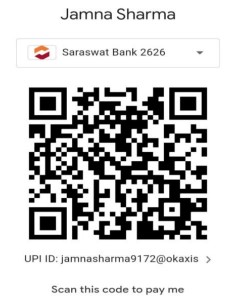
The fees shall be paid through UPI apps like Paytm /PhonePe/Google Pay on the number mentioned below;

UPI transaction enabled number:

Google Pay No: 8422088779
(One can also pay by scanning the below QR Code)

Bank details for NEFT transfer:

  • Name: Sharma Jamna
  • Bank Name: Saraswat Bank
  • Account No. 199200100002626
  • Branch Code:199
  • IFSC code: SRCB0000199

Important Dates

  • Last date for registration: April 17, 2022.
  • Submission of soft copies of the memorial: On or before April 20, 2022.
  • Submission of hard copies of the memorial: On or before April 24, 2022.

Brochure

Contact details

Mail at: st.wilfredmootcourt2022@gmail.com

Contact Number:

  1. Eram Siddiqui (Student Co-ordinator): 8291128369
  2. Pooja Dube (Student Co-ordinator): 8956491623
  3. Mahesh Kamble (Student Co-ordinator): 8850962803
  4. Professor Ms. Sharma (faculty): 9372251554

Disclaimer: All information posted by us on LexPeeps is true to our knowledge. But still, it is suggested that you check and confirm things on your level.

WhatsApp Group:

https://chat.whatsapp.com/GRdQLsHRwmB7QVRmS3WK

Telegram:

https://t.me/lexpeeps

LinkedIn:

https://www.linkedin.com/company/lexpeeps-in-lexpeeps-pvt-ltd

About Shankarrao Chavan Law College

To nurture future lawyers with the ideals and values required for playing a constructive role to create a better world, in 2003, Shankarrao Chavan Law College was established.

About Intellectual Property Rights Cell (IPR Cell)

SCLC has established the Intellectual Property Rights Cell to create awareness about these rights and sensitize students about their importance.

It provides a platform to share and discuss the latest developments in the area of IPR and their applications with practical exposure to students, faculty members and research scholars.

About the Conference

Intellectual property rights refer to the privileges given to the inventor, creator, or an organization to protect their innovation for their exclusive use rights for a certain period. Their Importance arises from the encouragement and the financial aid to stimulate creativity in the field of modern sciences and technology. Several amendments were made to the Intellectual Property Rights Laws considering the impact of socio-economic and technological developments.

However, despite these amendments, there has been a consistent increase in violations of IPR in the form of music piracy, software piracy, linking, caching, framing, digital databases and plagiarism, etc., and these violations adversely affect the economy.

Additionally, counterfeiting of trademarks in cyberspace and cybersquatting is increasing day by day, and without stringent provisions, these issues will not be resolved. Trade secret or undisclosed information protection is one of the challenges companies or businesses face in the absence of concrete legal provisions.

Further, the Patent Amendment Act 2005 introduced process and product patents in food, chemical, and pharmaceutics; however, there is a need to balance conflicting claims of access to medicine and exclusive right over patents in compulsory licenses.

This peculiar imbalance has resulted in a reluctance to grant compulsory licenses, evident from fewer licenses permitted even in medical emergencies. IPR has environmental implications as well.

Patent Law has always been criticized for environmental pollution, greenhouse effects, and climate change, and there is an urgent need to revisit the provisions in the light of sustainable development. Growing unauthorized commercial use of traditional knowledge makes indigenous communities more vulnerable, and in the absence of comprehensive law at the international level, it isn’t easy to protect these resources.

Further, biotechnological inventions and their impact on the environment need to be reviewed, considering Laws on Climate Change and Biodiversity.

Effective enforcement of Intellectual Property Rights can be understood by analyzing the intersection of IPR with other Laws. There is always debate and controversies between IPR and other laws. Such asIPR provides exclusive rights and recognizes the monopoly, and on the other hand, Competition Law prevents monopoly. These are just some of the issues prevailing in the IPR regime. These issues need academic discussion and deliberations.

Therefore, MMSCLC’s Intellectual Property Rights Cell considered it necessary to have a brainstorming discussion regarding various problems prevailing in Intellectual Property Rights and to find solutions to deal with them in these changing times.

Call for Papers

Unpublished and quality research papers from students, academicians, and professionals are invited.

Sub-themes

  • Copyright protection in the digital era
  • Biodiversity and protection of biotechnological innovations under the new patent regime
  • Access to medicine and pharma patent
  • Counterfeiting of trademarks and the need for stronger protection
  • Biopiracy, traditional knowledge, and rights of indigenous people
  • Protection of trade secrets in the information age
  • Geographical indication and community rights protection
  • Protection of semiconductor integrated circuit and layout design
  • Protection of IPR in cyberspace
  • IP Protection and environmental law
  • Harmonization of IPR and competition law

Note: The sub-themes mentioned above are not exhaustive. The author can select any other sub-theme related to the main theme.

Submission Guidelines

  • The organizer invites original, unpublished research papers for the virtual National Conference from
    students, research scholars, academicians, and professionals on the above sub-themes.
  • Authors shall declare that the manuscripts submitted for the conference do not infringe any other person’s copyright.
  • The interested researcher should send an abstract that contains 250-300 words accompanied by a brief profile of the author by filling out the registration form.
  • Format of Paper:
    • Font Size: 12
    • Font: Times New Roman
    • Word Limit: Minimum of 3000 to a maximum of 5000 words
    • Language of paper: Papers shall be submitted and presented in English only
  • Co-authorship: Up to two co-authors are allowed
  • Citation method: ILI
    • Line spacing: 1.5
    • Page alignment: Left-1.5, Right-1, Top-1 and bottom-1

Publication Opportunities

The Organizing Committee plans to publish the research papers in the form of conference proceedings/books with ISBN No. after the conference, and the selection depends on the quality of the research paper.

How to Register?

  • The participants can participate in this conference by filling out the google form and depositing prescribed fees applicable to their category.
  • Kindly take the screenshot or receipt of payment to upload in the google form while registering.
  • In the case of paper presentation, the researcher should fill out the registration form by uploading the abstract with other details.
  • The registration fee is not refundable.

Fees

For Participation

  • Law Student of SCLC, Pune: No fee
  • Law Student and Research Scholar: Rs. 100/- 
  • Academicians and Professionals: Rs. 200/- 

For Paper Presentation

  • Law Student of SCLC, Pune: No fee
  • Law Student and Research Scholar: Rs. 200/- 
  • Academicians and Professionals: Rs. 400/-

Payment Details

Payment Details:

  • Name: MMMS Shankarrao Chavan Law College
  • Account Number: 50100106697534
  • Bank Name: HDFC Bank
  • Branch: Mayur Colony, Pune
  • IFSC Code: HDFC0000149

Important Dates

  • Submission of Abstract: April 11, 2022
  • Confirmation of Abstract: April 13, 2022
  • Submission of Full Paper: April 20, 2022
  • Last date of Payment of Fees & Registration: 20th April 2022
  • National Conference & Paper Presentation: April 26, 2022

Brochure

Contact details

In case of any query, please contact on:

Disclaimer: All information posted by us on LexPeeps is true to our knowledge. But still, it is suggested that you check and confirm things on your level.

WhatsApp Group:

https://chat.whatsapp.com/GRdQLsHRwmB7QVRmS3WK

Telegram:

https://t.me/lexpeeps

LinkedIn:

https://www.linkedin.com/company/lexpeeps-in-lexpeeps-pvt-ltd

About SoL, NMIMS

The School of Law under the auspices of Narsee Monjee Institute of Management Studies, deemed to be University, Mumbai, Indore Campus, got established in 2019 after receiving approval by the Bar Council of India.

About the Asian Parliamentary Competition

The organizing committee Samvaad, a student-governed committee, was established with intrinsic
value of the Ancient Indian Philosophy of Vadashastra- वा देवा देजा यतेतत्वबो ध: meaning “Truth is discovered and assimilated or realized by debates and discussions,” in 2020.

Samvaad aims to facilitate an inclusive and accessible platform for the new generation of aspiring lawyers by encouraging them to think wisely, talk valiantly, and debate logically; with such values and determination, the committee is organizing its First Edition of National Parliamentary Debate-Asian Style.

The debate rounds would be held in four stages two (2) Preliminary rounds, followed by
Quarter-Finals, Semi-Finals, and The Grand Finale.

Format of Debate

Each debating match will consist of two teams; one to propose the motion and one to oppose it. The
the team proposing may be known as ‘The Proposition,’ ‘The Affirmative,’ or ‘The Government.’

The team opposing may be known as ‘The Opposition’ or ‘The Negative’. Teams will be designated as the
Proposition or the Opposition for each round of the competition.

How to Register?

Fee and Payment

Rs: 350/-

UPI ID: gayacool1@okicici

Registration

To register for the NMIMS Asian Parliamentary Debate Competition, click on the link-

for institutional registration

for cross-institutional registration

Brochure

Contact details

  • Kamna Behrani: 9109698880
  • Yashaswi Shukla: 9179075954
  • Gayathri Krishnan: 8356967912

Email Address: samvaad@nmims.edu

Disclaimer: All information posted by us on LexPeeps is true to our knowledge. But still, it is suggested that you check and confirm things on your level.

WhatsApp Group:

https://chat.whatsapp.com/GRdQLsHRwmB7QVRmS3WK

Telegram:

https://t.me/lexpeeps

LinkedIn:

https://www.linkedin.com/company/lexpeeps-in-lexpeeps-pvt-ltd

About the Organisation

PRS Legislative Research, commonly referred to as PRS, is an Indian non-profit organization established in September 2005 as an independent research institute to make the Indian legislative process better informed, more transparent, and participatory. PRS is based in New Delhi.

What do they do?

Each Member of Parliament (MP) in India represents over two million constituents. The Indian Parliament passes an average of 60 Bills every year. MPs make laws and address complex policy issues across various sectors. Given the diversity of issues and the technical nature of many of them, it is not possible for MPs to be well versed on all such issues.

In this context, PRS provides MPs analysis on legislation and policy to help them prepare for parliamentary debates.

PRS was co-founded by C.V. Madhukar and M.R. Madhavan in 2005. M.R. Madhavan is currently the President of PRS. The Board of Directors is headed by Mr. S. Ramadorai. The initiative was incubated in the Centre for Policy Research (CPR), New Delhi, a leading Indian think tank. Since 2013, the initiative has been institutionalized as the Institute for Policy Research Studies, a not-for-profit Section 8 Company.

The work of PRS is entirely funded through philanthropic donations and grants by several Indian institutions and individuals.

About the Internship

PRS offers rolling internships throughout the year.

The PRS staff consists of a team of dedicated professionals with different areas of expertise and is broadly divided into the research and outreach departments.

While the research team analyses legislative and policy issues of topical interest, the outreach team tracks the working of the legislatures and legislators, manages citizen engagement, and is PRS’s interface with the MPs and MLAs.

A prospective intern can apply for an internship in either/both departments.

Please Note: PRS Legislative is currently only accepting applications for May 2022. This is a ‘work-from-home (online)’ internship.

Structure of the Internship

The internship varies from session to non-session time.

  • During a Parliament session, PRS’s work is guided by the issues taken up in Parliament, and interns are expected to work with the analysts on any projects.
  • During non-session periods, the interests of the individual intern are taken into consideration, and he/she is matched with an analyst(s) doing related work.

The successful completion of a PRS internship requires the intern to pursue and complete an internship project. The intern will be assisting analysts in their research and undertaking an internship project.

Duration of the Internship

The internship duration is flexible but is normally between 4 and 8 weeks.

Mode of Internship

Physical (In-office); Interns will have to report to the office.

Expectations from Interns

In addition to a deep interest in the working of Parliament and the legislative process in India, an intern should have:

  • Strong writing skills
  • Strong analytical skills

Stipend

Please note that no accommodation or remuneration is provided. This is strictly an unpaid internship.

Application Procedure

Interested persons can fill in the application form. The form has to be filled out in one session, and there is no option of saving responses.

PRS is only accepting applications for internships starting May 2022.

Important Note: For the internship in the month of May, apply latest by April 20.

You are expected to:

  • write a short statement of purpose (not more than 500 words).
  • upload an up-to-date resume in PDF format.
  • upload a writing sample on any policy issue (not more than 1000 words) in PDF format.

Location

Address of the office:

PRS Legislative Research 3rd Floor, Gandharva Mahavidyalaya, 212, Deen Dayal Upadhyaya Marg, New Delhi – 110002

Contact Information

For any queries, please write to internship@prsindia.org.

Link for the official information

https://prsindia.org/aboutus/opportunities-at-prs

Link to apply

https://docs.google.com/forms/d/e/1FAIpQLSd48lpfVAB1t71fsKIaqRjFkVLeLyaWzQzpLWEY9_r3qQb6kw/viewform

Disclaimer: All information posted by us on LexPeeps is true to our knowledge. But still it is suggested that you check and confirm things on your level.

WhatsApp Group:

https://chat.whatsapp.com/GRdQLsHRwmB7QVRmS3WK

Telegram:

https://t.me/lexpeeps

LinkedIn:

https://www.linkedin.com/company/lexpeeps-in-lexpeeps-pvt-ltd

About IT for Change

IT for Change is an NGO based in Bengaluru, India. IT for Change aims for a society in which digital technologies contribute to human rights, social justice, and equity.

About the Job Opportunity

IT for Change in Bangalore is seeking to hire an experienced professional for the job role of Policy Researcher, in Digital Rights.

This track will focus on freedom of expression, privacy, and traditional digital rights issues. Expertise in social media governance (with a focus on hate speech) and familiarity with the international human rights frameworks are desirable.

The ideal candidate will lead and support research on cutting-edge themes within the pertinent track, undertake socio-economic and legal analysis and engage actively in national and global policy processes.

Primary Responsibilities

  • Steering policy and legal research addressing social justice and equity with respect to the pertinent track.
  • Inputting into and supporting policy consultations and other national and global advocacy opportunities in the domain to influence norms development.
  • Assisting with organizing sessions and attending/presenting at national and international advocacy events.
  • Developing written outputs from research initiatives, including reports, academic articles, media pieces and explainers.
  • Supporting organizational grant development and collaboration and M&E activities of projects.

Eligibility

  • A PhD/Masters’ degree for the concerned track (including but not limited to, law, public policy, economics, critical media studies, feminist studies and other allied degrees).
  • 3+ years of demonstrable research experience.
  • Excellent technical and academic writing skills.
  • Training and familiarity in research methodologies.
  • A strong public policy orientation.
  • Experience with managing people, resources and action plans effectively in asynchronous, global arrangements.

Desirable

  • Oral/written fluency in Kannada/Hindi.
  • Fluency in handling social media platforms for outreach and communications.

How to Apply?

Interested candidates should apply to jobs-Policy-Researchers[at]itforchange[dot]net, with a CV and a writing sample/portfolio.

The subject line should be ‘Policy Researcher – Digital Rights’.

Remuneration

Designation and remuneration will be commensurate with prior experience and qualifications.

Location

Bangalore (now, Bengaluru), Karnataka

Disclaimer: All information posted by us on LexPeeps is true to our knowledge. But still it is suggested that you check and confirm things on your level.

WhatsApp Group:

https://chat.whatsapp.com/GRdQLsHRwmB7QVRmS3WK

Telegram:

https://t.me/lexpeeps

LinkedIn:

https://www.linkedin.com/company/lexpeeps-in-lexpeeps-pvt-ltd