
Introduction

Communalism was an element of Indian history before Indian independence. It did, however, develop fiercely in India’s contemporary politics, driven by British colonization. The emergence and development of communalism have their unique histories. In reality, the British tactic of “divide and rule” included communalism, which may be dated back to the period before independence. Hindus and Muslims came together during India’s first war of independence [1857] to drive away British Empire. The British put an end to the movement and later began using the “divide and rule” strategy to incite Muslims against Hindus and vice versa. Communalism is employed in a variety of ways to obtain a political benefit or to cause community conflict.

India’s religious and cultural diversity inspires communalism as a political notion. It has been used as a political propaganda weapon to incite communal animosity and violence among communities based on religious and ethnic identity. It doesn’t take much intelligence to notice that communalism is rapidly increasing in India. Leaders connected to the current administration have called for the annihilation of Muslims; meanwhile, what are supposed to be more moderate voices on that side are raising a number of concerns that target Muslim daily life, such as their call to prayer, the wearing of the hijab by Muslim women, and the sale of Halal meat.

Attachment to a religious community does not constitute communalism. A person’s religiosity toward a community does not imply communalism. However, employing a religious community against other groups and the entire nation is communalism. In contemporary society, communalism is blind adherence to one’s own religious group. It is characterized as a weapon for or against mobilizing people through communal service appeals. Dogmatism and religious fanaticism are linked to communalism.

Factors behind Communalism prevalence in India

The Indian Constitution guarantees citizens several essential rights (i.e. individuals). In the case of minorities, however, the entire community has been granted fundamental rights under Articles 28, 29, and 30, which provide that they are free to administer their own educational institutions and have the right to preserve their own culture. However, these rights are employed above and beyond individual rights by personal law boards governed by their own community laws. As shown in the Shah Bano case.

There is also animosity toward such personal rules, and there is growing support for a uniform civil code, which is also referenced in Article 44 of the Indian constitution’s Directive principle for states. This will assist to bridge religious divides. In the lack of a uniform civil law, all communities are perceived to have conflicting and contradictory interests. As a result, community-based pressure organizations bargain on behalf of their own community. These communities struggle for power and resources at the political level. This competitiveness leads to huge wars. Politicians attempt to convert these communities into vote banks, and various communities become watertight compartments.

Since its independence, India has pursued the notion of nation-building based on secularism. Even after 68 years of freedom, India is still on fire from communalism. However, there are several explanations for this. However, just a few of them have been explored here, with the awareness that the causes that play a part in the maintenance of communalism are:-the first religious, and the second political. The third one is socioeconomic, and the fourth is global.

In the first case, religious fundamentalism should be held accountable for communalism. After all, fundamentalists believe that “our belief alone is real” and that “the rest is wrong or inadequate.” According to this mindset, when members of any religious group, sect, or sub-sect engage in their activities, they are bound to clash with others. The reason is self-evident. They lack tolerance, which is essential in a country like India, which has many distinct religious sects. They become the source of conflict, hostility, and strife.

Politicians have also played a major part in escalating communal tensions in India. Politics was at the heart of India’s agonizing partition in 1947 in the name of a specific religious group. However, even after paying a high price in the form of division, we may discover political parties or their followers directly or indirectly involved in many subsequent riots. Along with this, the strategy of appeasement, selection of candidates based on community, sect, sub-sect, and caste, and inflaming religious feelings before elections all contributed to the emergence of communalism. These abuses are still being carried out, and the country is suffering as a result. Many negative consequences of these actions can be seen.

Though India’s socioeconomic conditions have improved since independence and economic reforms since 1991 have been essential in improving such situations, there are still numerous obstacles in front of Indian society that pose a danger to its variety. Population, poverty, illiteracy, and unemployment all produce a lot of compulsions, especially among the younger generation. As a result, many members of the younger generation, who are unemployed and living in poverty, become involved in evils such as communalism. Efforts to eradicate poverty, illiteracy, and unemployment are not yielding the expected results.

External forces (including non-state actors) also have a role in exacerbating and escalating the communalism problem. We cannot name any specific country in this respect, but researchers and people who think about this issue on a regular basis have underlined this fact.

The following are the primary causes for external factors’ engagement or influence in riots:

  1. To create an unstable environment in order to become socially weak;
  2. To wish for compassion from minorities;
  3. attempting to undermine a foreign country’s economic system; and
  4. In order to mask their own inadequacy

Outcomes of Communalism

The most serious consequence of communalism is communal tensions or rioting. When religious issues are politicized, it leads not just to communalism but also to fascism as well as to communal riots. Riots that occur as a result of conflicts between two or more communities’ communal interests are referred to as communal riots.

Communal violence is a phenomenon in which members of two distinct religious communities band together and attack one other with sentiments of hatred and animosity. The revival of Hindu-Muslim economic struggle, particularly among the poor and middle classes, has fostered communalism. In addition, social media has proven to be an efficient instrument for sharing information about communal tensions or riots in any section of the country.

The absence of interpersonal confidence and understanding between two groups frequently results in perceptions of threat, harassment, fear, and significant risk in one community towards the members of the other community, which in turn leads to fights, hatred, and rage phobia. We are all aware of the consequences of communism. The poor are the genuine victims of mass massacres; they lose their homes, their loved ones, their lives, their livelihoods, and so on. It violates human rights from every angle. Sometimes children will lose their parents and become orphans for life, with no one to care for them.

In addition to having an impact on society, it is a danger to Indian constitutional norms that encourage secularism and religious tolerance. In that circumstance, citizens fail to fulfil their essential responsibilities to the nation. It poses a danger to the nation’s unity and integrity as a whole. It just spreads hostility in all ways, splitting society along communal lines. Aside from this, minorities are viewed with mistrust by everyone, including state officials like as police, paramilitary forces, the army, intelligence services, and so on. There have been several occasions where members of this group have been harassed and jailed, only to be freed guilt-free by court rulings. There is no mechanism for compensating such victims for lost livelihood income, social humiliation, or emotional distress to their families.

Such things are a bump in the road for society and an obstacle to its progress. This is also one of the reasons that India is still classified as a “developing nation,” because such activities frequently harm the country’s human resources and economy. Again, it takes years for individuals and impacted areas to recover from the horrors of such violence, which has a profound influence on the brains of those who have experienced it. They have been emotionally shattered and insecure their entire lives.

Some Infamous Cases of Communal Violence in India

  • Partition of India, 1947-Following partition, millions of people was compelled to relocate from both sides of the border. Hindus in Pakistan and Muslims in India were massacred in large numbers, women were raped, and many children were orphaned. There was hatred everywhere, and violence saw nothing but bloodshed. Later, it became a refugee problem, and their rehabilitation became one of the most difficult challenges for independent India.
  • There were no major religious riots until 1961 when the Jabalpur riots rocked the country more because of the economic struggle between a Hindu and a Muslim bidi producer than any electoral competition.
  • In the 1960s, a series of riots erupted in the eastern section of India, mainly in Rourkela, Jamshedpur, and Ranchi, in 1964, 1965, and 1967, in areas where Hindu refugees from then-East Pakistan were being placed.
  • In April 1974, violence erupted in a chawl, or tenement, in Mumbai’s Worli district as police attempted to disperse a Dalit Panthers gathering that had become violent after fights with the Shiv Sena.
  • After Indira Gandhi’s death in October 1984, anti-Sikh riots erupted in Delhi, Uttar Pradesh, and other regions of India, killing around 4000 Sikhs.

One thing is consistent in all of these and hundreds of previous riots: the vast majority of casualties had nothing to do with community animosity. In summary, perpetrators of violence and victims of violence are distinct individuals. Similar to the preceding list, there are many others that have impacted the masses and killed individuals on a big scale. Bombay bombing in 1993, Lashkar-e-Toiba attack on Akshardham in 2002, and Varanasi bombing in 2006 are only a few examples of anti-Hindu incidents.

Steps to be taken to deal with Communalism

Communalism is a crippling paralysis that must be addressed. Communal Riots are a constant danger to religious unity in our country. They must be dealt with and handled efficiently. A few recommendations in this respect may be made. While making proposals is simple, putting them into action is a significant difficulty. There is a need for reform in the current criminal justice system; quick trials and proper recompense for victims may serve as deterrents.

The increased presence of minorities and underrepresented groups in all branches of law enforcement, as well as training of forces on human rights, particularly in the use of guns in compliance with the UN code of conduct. Codified standards for administration, specialized training for the police force to deal with communal riots, and the establishment of specific investigative and prosecuting organizations can all help to reduce serious communal discontent.

Value-oriented education, with a focus on the values of peace, nonviolence, compassion, secularism, and humanism, as well as developing scientific temper (enshrined as a fundamental duty) and rationalism as core values in children in both schools and colleges/universities, can be critical in preventing communal feelings. Media, films, and other cultural outlets can have an impact on encouraging peace and cooperation. Though all of these practices are popular in India, there is definitely a need for development in this area.

Thus, concerted efforts are required to address the problem of communalism in India. Everyone must carry out their responsibilities. If we do this, there will undoubtedly be harmony. Everyone will benefit. This must be done; it was Mahatma Gandhi’s ambition for a free India.

Conclusion

Communalism has taken a toll on Indian residents and has, directly and indirectly, harmed many families. The communal problem should be addressed via communication and understanding. Steps should be done to encourage unity through cultural exchange programmes. Globalization has also brought the world closer together and contributed to the reduction of communalism in several nations, including India.

References

  1. Communalism – Definition and its Types (unacademy.com)
  2. Communalism – ONLYIAS – Nothing else | UPSC IAS EXAM PREPARATION
  3. Communalism (drishtiias.com)
  4. 6 Major Social Issues in India: Causes and Measures (sociologygroup.com)
  5. Ahuja, R. (2014). Social problems in India. Jaipur: Rawat Publications.

This article is written by Devishee Arora, a 4th-year B.COM LLB (Hons.) student at Amity Law School, Noida
INTRODUCTION

A person who works in prostitution is referred to as a prostitute or a sex worker. Prostitution is the practice or business where people participate in sexual behavior for payment. Prostitution can take place in a variety of settings, and its legal position varies from country to country as well as from region to region within a country. It can range from being an upheld or unenforced violation to being an uncontrolled or a directed vocation. In the same way that pornography or any other form of sexual entertainment is a component of the sex industry. Brothels are establishments that are solely focused on prostitution. Prostitution laws and conditions are generally changing globally, reflecting divergent judgments. Prostitution is perceived by some as a form of violence or cruelty against women and children that leads to the grave crime of human trafficking.

HISTORY OF PROSTITUTION IN INDIA

According to Indian history, prostitutes in the past were called “Devadasi,” and they gave their entire lives to serving Lord Krishna. Some religious beliefs hold that the Devadasis see the Gods as their spouses and, as a result, are not permitted to marry other human beings. Later referred to as “Nagarvadhu” or the “Brides of the town,” they were requested to perform for and by the wealthy and the aristocracy. According to historical experts, the royal families regarded the Devadasi with respect and deference, prior to British domination. No man, not even the Mughals and Kings, intended to even approach them. However, as the British entered the country, this stopped.

In front of the British commanders, the Devadasis started showcasing their talent, which led to the first one-night stands. The British started summoning these artists for sex, which prepared India for prostitution. The emergence of Devadasi as a prostitution business during the British era led to a decline in temple dances. As time went on under British control, the Indian economy shriveled and the majority of people struggled to make a living. Women then began trading their bodies for cash with the British populace.

Japanese women were captured and sent to India as sex slaves in the late sixteenth and early seventeenth centuries when some regions of India were Portuguese provinces. Another instance of the increased use of women as sex slaves was under the Company Rule in India. For its soldiers, the military constructed whorehouses all over India. Village girls and women were employed by the brothels and officially compensated by the military.

IS PROSTITUTION LEGAL IN INDIA?

When it comes to prostitution, there are three different types of nations.

  • Where prostitution is prohibited and against the law, such as in Kenya, Morocco, Afghanistan, etc.
  • Where prostitution is permitted with certain limitations and restrictions, such as in India, Canada, France, etc.
  • In countries with appropriate legal regulations, such as New Zealand, Australia, Austria, the Netherlands, etc., prostitution is permitted.

One of the most important questions is whether prostitution is permitted in India, and if so, whether prostitutes have any rights.

In India, prostitution is permitted subject to several restrictions. It’s against the law to engage in activities including pimping, child prostitution, service solicitation in public areas, owning a brothel, and pandering. To address the issue of prostitution and trafficking, various state laws have been passed, including the Juvenile Justice (Care and Protection of Children Act) (JJ), 2015, the Indian Penal Code (IPC), 1860, the Prevention of Immoral Traffic Act (PITA), and the Constitution of India, 1950. PITA, formerly known as the Immoral Traffic (Prevention) Act of 1956, was enacted and put into effect after India on May 9, 1950, in New York, ratified the United Nations Declaration for the Suppression of Women Trafficking.

The penalty for operating a brothel is a fine of up to 2,000 rupees and a sentence of one to three years in prison. The punishment for child prostitution is seven years of hard labour, with the possibility of life in jail. According to Section 370A of the IPC, the offender who takes advantage of a youngster who has been trafficked faces a five to seven-year prison sentence. They are entitled to getting the fundament rights of a citizen promised to them by the Constitution.

COURT RULINGS

  1.  Budhadev Karmaskar v State of West Bengal – The case dealt with the brutal murder of Chhaya Rani Pal alias Buri, a sex worker who succumbed to grievous injuries after being brutally beaten up by the accused, Budhadev.
  2.  Gaurav Jain v Union of India – The Supreme Court, passed a request, coordinating inter alia, the constitution of a council to make a thorough investigation of the issue of prostitution, young girls, and their offspring, and to advance reasonable plans for their salvage and recovery.
  3. Manoj Shaw & Manoj Kumar Shaw v State of Bengal – It was observed that sex workers should be treated as victims and not accused. When prostitution was busted, the prostitutes were put behind bars whereas the owner of the bar was merely sent a notice. This didn’t seem fair.

RECENT HIGH COURT JUDGEMENT

Kajal Mukesh Singh & Ors. v. State Of Maharashtra (2021)

‘Prostitution is not an offence; a woman has a right to choose her vocation’

  1. A, B, and C, the petitioners
  2. The State of Maharashtra is the respondent.
  3. The Immoral Trafficking (Prevention) Act of 1956 declared that the petitioners were the victims of the crime of pimping. They are listed in the records as A, B, and C to avoid being identified. Three sex workers filed the petition in an effort to overturn the orders made by the Metropolitan Magistrate Mazgaon and the Additional Sessions Court Dindoshi, both of which supported the prior judgement.

Observation of the High Court: The Court emphasized that the act’s goal is not to outlaw prostitution or prostitutes; rather, what is punished is sexual exploitation, commercial sex, and situations in which someone is running a brothel or enticing someone else. As their fundamental rights are protected by Article III of the Constitution, they too have the freedom to live as they like and to practice their chosen profession. Since the victims are adults and have the same fundamental rights as regular citizens, their permission should have been sought before placing them in a corrective facility.

PROBLEMS OR CHALLENGES FACED BY SEX WORKERS IN INDIA

The sex workers in India face multiple traumas – sexual violence, emotional abuse, and physical assaults from clients. Their living conditions are appalling as well; crowded streets and cramped quarters are negatively impacting their health, which leads to an increase in health-related issues. HIV, STDs, and cervical cancer are on the rise amongst them as little action has been taken to improve their situation. Additionally, they experience crippling prejudice and stigma, which makes it harder for them to defend their health and wellbeing.

There are many reasons why prostitution continues to thrive in society. Ill-treatment by parents, bad relationships, disturbed family culture, social customs, lack of sex education, media image, rape, early marriage, and desertion are just to name a few. The rights of sex workers are in reality non-existent even though they appear just like other citizens on paper. Prostitutes are continuously looked down upon and have no place in society, most of them are exposed to a slew of abuses, and they face harassment from clients as well as their own family members.

LAWS RELATING TO PROSTITUTION IN INDIA

  • Section 372 and 373 of the Indian Penal Code 1860 deal with prostitution but it is only restricted to child prostitution.
  • Immoral Traffic (Prevention) Act – 1956
  • The legislation governing sex work in India is the Immoral Traffic (Prevention) Act, enacted in 1956.
  • The legislation penalizes acts such as keeping a brothel, soliciting in a public place, living off the earning of sex work, and living or habitually being in the company of a sex worker.
  • Section 366 A, 366 B, 370A, of the IPC deal with punishment for offences of procreation with respect to a minor girl, importation of a girl from abroad for sexual purposes, and exploitation of a trafficked person respectively. Under IPC, laws relating to prostitution are quite limited.

SEX TRAFFICKING IN INDIA

For women and children who are victims of sex trafficking, India serves as a source destination and transit country. The majority of India’s trafficking issues are internal, and the most susceptible groups are those from the most economically and socially disadvantaged socioeconomic strata – those who belong to tribal & other backward communities. According to reports, thousands of unregulated labour placement firms use deceptive employment promises to recruit individuals and children into sex trafficking.

According to experts, sex trafficking affects millions of women and children in India. Traffickers subject women and girls to sex trafficking by making false work promises or setting up fictitious marriages in India or the Gulf states. In addition to typical red-light districts, tiny motels, cars, huts, and private homes are increasingly becoming the places where women and children are subjected to sex trafficking. In India, sex trafficking affects a large number of women and girls, primarily from Nepal and Bangladesh as well as Central Asia, Africa, and Asia, especially the Rohingya and other minority communities from Burma.

PROSTITUTION BEING LEGALISED

  1. It will result in sex workers living better lives.
  2. Labour rights will be given to sex workers.
  3. The authorities will have the information necessary to monitor whether any minors are engaged in prostitution.
  4. Forced Prostitution will not exist.
  5. Fewer instances of trafficking and rape.
  6. Financial empowerment. 
  7. Reduction in minor sex workers.

 DEFENSIBLE PROSTITUTION–RELATED OFFENCES 

  • Anyone who owns, operates, or aids in operating a brothel will be subject to a fine of up to two thousand rupees as well as a sentence of imprisonment of at least one year and a maximum of three years.
  • Anyone who coaxes, buys, or kidnaps a girl with the intent to force her into prostitution faces a minimum sentence of seven years in prison and a maximum of fourteen years in prison as well as a fine of up to 2,000 rupees.
  • Anyone caught holding a woman in brothels faces a minimum sentence of seven years in prison and a maximum of 10 years in prison.
  • Any person who engages in prostitution within 200 m of a public area, such as a hostel, hospital, temple, etc., faces a sentence of up to three months in prison. When a kid is involved, the crime is punishable by a minimum seven-year sentence that could go up to ten years in prison.
  • Anyone caught soliciting prostitutes faces a sentence of up to one year in prison or a fine of Rs. 500 on their first offence, and up to two years in prison on their second offence.

STEPS THAT SHOULD BE TAKEN IN ORDER TO FIGHT WITH PROSTITUTION

  • The victims who are still of school-going age should have access to formal education, while adults should have access to non-formal education.
  • All rescued victims who are not interested in education should get gender-sensitive, market-driven vocational training from the central and state governments in collaboration with non-governmental organizations.
  • Rehabilitation and reintegration of rescued victims is a long-term process, recruitment of a sufficient number of qualified social workers and counselors in government-run institutions and homes, either on their own or in cooperation with non-governmental groups.
  • It is important to promote legal literacy and awareness of economic rights, especially for women and adolescent girls.

CONCLUSION

Finally, it may be concluded from the study that it would be foolish to turn blind eye to it and act as though the system and its problems do not exist in a society where prostitution has been a long-standing profession and is still prospering as a business. By offering greater pay, health security, and protection, legalizing sex work will improve the quality of life for sex workers. Additionally, it will be a progressive move on the part of society to get rid of numerous societal ills like child prostitution, rape, sex trafficking. and other things.


This article is written by Aditi Jangid, a 1st year law student pursuing bachelor’s degree from Delhi Metropolitan Education (Affiliated to GGSIPU).

INTRODUCTION

Human rights are considered to be sacrosanct. It is the set of rights with which a person is born. These rights ensure that a person has a good standard of living. Human rights give people good life full of happiness and prosperity. Each human right plays a very crucial role in shaping a person’s life. Human rights are mostly referred to as fundamental or inherent, birthrights. These rights are not created by any state or any legislation and neither are they subjected to any kind of amendment. The Universal Declaration of Human Rights defines human rights as the right derived from the inherent dignity of a human person. Human rights are inclusive of civil and political rights. These rights usually limit the government authority that may affect the individual’s independence. There are also rights called ‘social rights’ where the government has various ways to improve the life quality of the citizen.

CHARACTERISTICS OF HUMAN RIGHTS

Some notable characteristics that define human rights are-

  1. Human rights are inalienable– Human right is a right given to a person even when the person is in the womb. These rights are given to a person irrespective of his religion, creed, sex, or nationality. His mere existence gives him this right.
  2. Human rights are necessary and essential– In absence of human rights, a person cannot achieve their fullest potential. Physical welfare, moral welfare, and social welfare are adversely affected without human rights.
  3. Human rights are in connection with human dignity– Human rights are about treating people with dignity; giving them respect as normal individuals irrespective of gender or race. Example: African Slaves were treated badly by the Americans, they were given many sorts of punishment like whipping, mutilation, raping, burning, etc.
  4. Human rights are irrevocable– Human rights cannot be taken away from any person as they originate from the social nature of the person, merely because he is a human he is enshrined with these rights.
  5. Human rights are dynamic– Human rights are not static, they cannot be defined in a restricted sense, and people change with respect to changes in time. Formulation of different treaties and conventions with change in time is a depiction of the dynamic nature of human rights.
  6. Human rights are never absolute– Human is a social animal, he can enjoy all of their rights without any restrictions but for a common good, the state may impose some restrictions and they can be only imposed by the state.

ORIGIN OF HUMAN RIGHTS AND ITS EVOLUTION

Human rights originated in 539 BCE, when Cyrus the Great captured Babylon, Cyrus freed all the slaves and said that all men are free, they can choose any religion and must have racial equality. Then in the year 1215 Magna Charta introduced the concept of Rule of Law wherein it defined basic idea of rights and liberties for all persons. Rule of Law concept mentions the sense of accountability, stability, equality and access to justice for all. Magna Charta was signed in 1689.

The Declaration of Rights of Man and of Citizen in 1789 which was adopted by the French National Assembly is a historical event based on the political concerns of civil and political rights. This declaration contained principles that inspired French Revolution. This declaration has specified some aspects of rights of liberty, private property, right to participate in elections, freedom of religion but these rights were not fully established due to the fall of French National Assembly in 1791. During this time the famous principles of some political thinkers like Rousseau, that good government must have freedom of all its citizens and Montesquieu, who argued the elimination of idea of Divine Rights of the King to Rule and if people are not satisfied with the rule of the king then they can rebel; gained popularity. These ideas have enlightened some kind of knowledge about human rights to common people. This resulted in French Revolution of 1789. During the 17th -18th century, it was considered an enlightenment stage where the people themselves were taught about their rights of life, liberty and pursuit of happiness.

The Second Generation of Human Rights in 19th century emerged when people realized that the rights which were stated in the 17th century were only established for some class of people. The poor and weaker sections hardly had leverage to exercise these rights. They realized that civil and political rights can be established by the people of the elite class. So the primary focus during these times was economic, social and cultural rights. The views originated from socialist thinkers like Marx and Lenin emerged about a stage of communist revolution for the welfare of the people and that state must ensure the welfare to the people so that people can reach up to their maximum potential. There must be democratic centralism and there must be an establishment of one party socialist state. The intervention of state is more here. This included the right to work, right to a standard of living, right to health and right to education. They are termed as the welfare rights as they pertain to the development of the people.

The Third Generation of human rights emerged with dynamic nature of human activities that affected the globe. The world suffered from two world wars. Geneva Convention and Hague Convention promoted basic level of dignity of individuals. The concerns over the protection of certain minority nations and peaceful co-existence were raised by the League of Nations at the end of First World War. Due to some political reasons and rise of dictatorship, it led to the fall of League of Nations. Then Second World War happened and thousands of lives were lost during that time; treatment of Jews in the concentrated camps, atomic bombing in Japan horrified the world and human rights were propagated as the global consciousness and eventually this led to rise of United Nations Organisation in 1945. There are other specialized agencies like International Labour Organisation for protecting workers rights increasing their safety and economic growth. People also did not like the concept of nation state so they thought for the benefit of whole mankind. They thought that all humans must get benefit in the process of human rights, the emergence of solidarity rights came into existence where rights were not spoken for a people in a specific country but in the whole world.

During the Fourth Generation of human rights, there were many technological developments and there were few growing concerns that whether the technology would encroach on human rights. Universal Declaration of Human Rights (UDHR) was established in 1948. Although UDHR is not legally binding it has different ways which keep a check and balance the exercise of state power and how a state should treat its citizens. There were other international covenants on Economic Social and Cultural Rights and Civil and Political Rights constituting the International Bill of Rights. It is mandatory now that all members of the UN must incorporate the provision of human rights in their constitution. UN has also adopted various treaties including conventions to prohibit various kind of crime that is against humanity like Convention on Elimination of All Form of Discrimination against Women and Convention on Rights of the Child.

Constitution of India contains basic human rights of all citizens, irrespective of their gender, caste, religion etc. India had signed the Universal Declaration of Human Rights on January 1942. If a part in the constitution is against the fundamental right then it is declared as void. These sections are vital elements of the constitution which includes Right to Equality, Right to Freedom, Right against Exploitation, Right to Freedom of Religion and Right to Constitutional Remedies among others.

In Kesavananda Bharati v State Of Kerala1 case it was stated that Universal Declaration of Human Rights may not be legally binding instrument but it shows how India understood the nature of human rights at the time the constitution was adopted. In Consumer Education & Research v Union Of India & Others2 case it was stated that the directive principles are the forerunners of UN Convention on right to development. The right to development is inalienably a human and fundamental right and everyone is entitled to it, along with being entitled to enjoy economic, social cultural and political development. In Air India Statutory Corporation v United Labour Union & Ors3 case it was held that right to health and medical care is a fundamental right of a worker under Article 21, read with Articles 39(e), 41, 43, 48A to make the life purposeful. In Mrs. Valsamma Paul v Cochin University And Others4 case it was stated that human rights are derived from the dignity and human rights and fundamental freedoms are interdependent.

CONCLUSION

Human rights are the basic rights given to every individual to achieve their maximum potential. Human rights have a very long way of history and development. India has also enshrined human rights in Part III and IV of the Constitution which are the fundamental rights and directive principles. Violation of fundamental rights will eventually cause a legislation to be declared void. All rights are covered under these two parts. Further, as part of the fourth generation of human rights, one needs to be careful about the fast developing technologies. In future there may be fusion of nuclear, biological, chemical and technological aspects which need to be looked at carefully and we must protect the human dignity at any cost. There might be future risks regarding human rights preservation and necessary steps must be taken to protect it. Though the human rights have several articles and conventions among nations, there is only limited progress of human rights as many people suffer from extreme poverty or they suffer from the policies of their own states. So, the human rights in future must be further progressive, giving everyone in this world a dignified life.


CITATIONS

  1. SC Writ Petition (civil) 135 of 1970.

2. 1995 AIR 922, 1995 SCC (3) 42.

3. SC Civil Appeal Nos. 15536-37, 15532-15534 of 1996 (Arising out of SLP (C) Nos. 7418-19/92 and 12353-55/95).

4. 1996(1) SC 571.

This article is written by Sree Lekshmi B J, a third year law student.

INTRODUCTION

‘Femina’, a Latin word for a woman, is the root of the English word “feminist.” But what exactly does feminism suggest? Due to individual people’s views, there are various responses to this question. The fundamental definition of feminism is a compilation of movements to determine, create, and protect equal rights for women in the fields of economy, education, politics, and other fields, as well as social rights for women with equal possibilities. An advocate of feminism may be a male, woman, or transgender person because it is a gender equality ideology. What is feminism jurisprudence, though, is a completely different subject that needs to be addressed.

Feminist jurisprudence, commonly referred to as feminist legal theory, is founded on the idea that the legal system has played a significant role in the historical subordination of women. Feminist legal theory has two objectives. First, feminist jurisprudence tries to explain how the law contributed to women’s past inferior status. Second, feminist legal theory is dedicated to enhancing the situation of women through a revision of the law and its treatment of gender.

THREE MAJOR SCHOOLS

Feminism promotes equal rights for both men and women. Feminist legal systems differ from one another. There are three major schools of feminist jurisprudence –

  1. Traditional or Liberal Feminism

It says that women are just as reasonable as men. Hence, they should also be given equal opportunities to make choices.

2. Cultural Feminist

In this type of school of feminism, the main focus is on the variances between the two genders. The thinkers appreciate those variances and propound that Women place more value on interpersonal connections, whilst males place more value on legal and logical abstractions. Giving women’s moral voices of compassion and communal ideals equal recognition is the aim of this school.

3. Radical or Dominant Feminism

The main focus of this school is on inequality. They propounded that the men dominated the women’s class and this results in the situation of gender inequality. Radical feminists see gender as a matter of power. Radical feminists admonish us to reject conventional methods that use maleness as their point of reference. They contend that women’s differences from men must be taken into consideration while constructing sexual equality.

APPROACHES TO FEMINIST PHILOSOPHY OF LAW

  1. The Liberal Equality Theory

Liberal feminism is a particular philosophy that deals with achieving equality between men and women and primarily emphasizes the ability of an individual to end discrimination against women. Liberal feminists want to empower people to follow their intuition and use their skills to make men and women equal in the eyes of the law and society. Their views on freedom are the main distinction between modern liberals and bygone liberal feminism.  To attain equality in democratic liberal countries, a contemporary liberal feminist maintains that women’s freedom and political autonomy must be promoted. A former liberal feminist, on the other hand, asserts that feminism’s political duty is limited to opposing laws that treat men and women differently, and that they have already succeeded in this objective. Despite this catfight, their ultimate goal is to unite women together so they may speak up and create enormous amounts of awareness.

The Sexual Difference Theory

Arguments for gender feminism are included in the theory of sexual difference. It makes the case that the causes of women’s mistreatment are intertwined with nature, psychology, and culture. It claims that there are many ways in which the cultural traits associated with femininity are superior and more potent than those associated with masculinity and that men and women should thus weave their reasoned webs.

2. The Dominance Theory

Dominance feminism is a philosophy held by feminists that reject the perspectives of difference feminism and equality feminism. The feminists who scream for equality want women to be given systematic equal access to all social, cultural, and legal male privileges. Feminists, on the other hand, promote gender diversity and call for women to get distinct legal and social protection in order to make up for historical injustices. The dominance theory, which contends that male social power is the outcome of well-documented disparity between men and women, in some respects supports feminists who fight for gender discrimination. Dominance feminism condemns men’s concerted efforts for women’s subordinate status in society. It asserts that men physically, sexually, and socially dominated women. They subjugated women socially by objectifying them, enforcing patriarchal rules on them, and denying them any legal rights. In terms of sexual harassment, they threatened to force them into sex, used catcalls, took advantage of them at work, and shaped them into simple sex objects. According to a Hindu shloka, “naari taran ki Adhikari”—which means that males should physically abuse women more—a woman is deserving of being beaten. The term “dominance feminism” is sometimes used to refer to Catharine A. MacKinnon.

3. The Anti-Essential Theory

 A cluster of fundamental qualities that are both sufficient and necessary for objects to be identical might be referred to as essentialism. To further comprehend essentialism, it includes two steps: the first is summarizing the things inside a single concept in order to distinguish between objects by taking into account their distinctive parts, and the second is classifying them as belonging to that concept. A loose definition of feminist essentialism is the belief that all women share certain psychological and biological characteristics, such as attractiveness, sympathy, fostering, and supportiveness, which are the origins of the idea that all women are fundamentally the same. According to essentialism, every woman has the same innate qualities. Simple opposition to this presumption is anti-essentialism. Anti-essentialists reject the idea that the definition of women should be based on fixed characteristics like genetics and psychology since doing so prevents women from changing and makes it harder for society to recognize them as individuals.

4. The Post-Modern Theory

Other feminist views are unique from postmodern feminism. It starts with the assumption that contemporary feminists have overlooked acknowledging differences within each gender because they are too preoccupied with the distinctions between men and women. Furthermore, it contends that gender was created through talks based on perception, which we eventually absorbed as time went on. In addition to this, postmodern feminists assert that the main reason why there are different forms of patriarchy is because of the social traits of women. The intersectionality hypothesis, which aims to look at how social, biological, and cultural classes simultaneously interact with one another, was used to frame these opinions.

FUNDAMENTAL RIGHTS

When it comes to equality, our constitution has given us certain rights and clauses that preserve the environment of positivist equality. When read in conjunction with Article 12, Articles 14 and 151 represent the ideas of our constitution’s authors and further protect women against gender discrimination. According to the reading of Article 14 given the gender equality perspective, all people, including women, have an equal right to protection under the law throughout the Indian subcontinent. Men and women should be treated equally under the law and by the country under similar situations.

However, Article 152 shields women from all forms of prejudice. Clause 3 of Article 15 grants the State the authority to create any additional provisions for women and children in order to maintain the idea of equal protection of the law in situations where the same treatment would have been accorded but was not. This clause is recognized in light of the historical social and economic disadvantages faced by Indian women, which resulted in their reduced participation in the nation’s socio-economic activities on an equal basis. The main motivation for the provision is to give women a voice, end their socioeconomic disadvantage, and unquestionably empower them.

In the decision-making process, democracy unquestionably gives everyone an equal chance. Since they make up over half of the population and are free citizens, women are theoretically capable of resolving their disputes through democratic channels. However, they are ineffective participants in the democratic game because of socioeconomic factors and cultural norms. A pro-woman and anti-subordination interpretation of the Constitution and legislation must be adopted, and this provision was further developed in light of positive discrimination, given the drawbacks of the democratic process and the dangers of parliamentary majoritarianism.

The court discussed the need for regulations to stop the dominance analysis techniques that are present in our patriarchal society in the case of Bodhisattwa Gautama v. Subhra Chakraborty.3 A woman, in our country, unfortunately, belongs to a class or group that is in a disadvantageous position due to several social barriers and impediments and has, as a result, been the target of tyranny at the hands of men. The court held that certain laws help to ameliorate the position of women in society and that they are also very constitutionally valid as they come under the legitimate heading of positive discrimination, which is fundamental to our country’s founding principles.

DIRECTIVE PRINCIPLES OF STATE POLICY

Gender equality is likewise included in Articles 39(a)4 and 39(d)5 of the Directive principle of state policy. While the second article advocates equal compensation for equal work for men and women, the first article discusses the equal right of men and women to an adequate means of subsistence. Maintaining a balance between individualism and socialism is the basic tenet of the Directive principle of state policy. To address the issue of women in the postmodernist era, the DPSP has taken all necessary steps.

Due to their long-sightedness, the framers were able to consider the challenges that women would have faced as society’s patterns changed. To further bolster this claim, Article 51(a)6 discusses a clause that forbids actions that are disrespectful to women’s dignity. The idea that the constitution has disregarded the position of women is unavoidable when looking at the statutes collectively. Our constitution’s drafters undoubtedly made an effort to include as many clauses as possible that, if absent, would have led to discrimination.

CONCLUSION

Men and women have always been seen as separate from one another as well as having different social statuses and levels of authority. Through some clever contrasts, such as behavioral traits, women have been purposefully portrayed as the antithesis of men. For example, men are assumed to be competitive, rational, aggressive, intelligent, political, and dominant leaders, while women are assumed to be fragile, emotional, domestic, caretaker, and underlings. Every political and economic organization, from educational to religious institutions, to beauty standards and relationships, has consistently followed some variation of these presumptions. Sadly, the law is not an exception. As a result, cultures recognized the need for feminist jurisprudence, and in order to reach this goal, feminists stepped up, questioned male-insight laws or practices, provided examples of illegitimate patriarchy, and provided guidance on how to build “equality” for women globally.


CITATIONS

1 The Constitution of India 1950, Art 12.

2 The Constitution of India, Art 15.

3 (1996) 1 SCC 490.

4 The Constitution of India 1950, Art 39(a).

5 The Constitution of India, Art 39(d).

6 The Constitution of India, Art. 51(a).

This article is written by Prerna Pahwa, a student at Vivekananda Institute of Professional Studies, New Delhi.

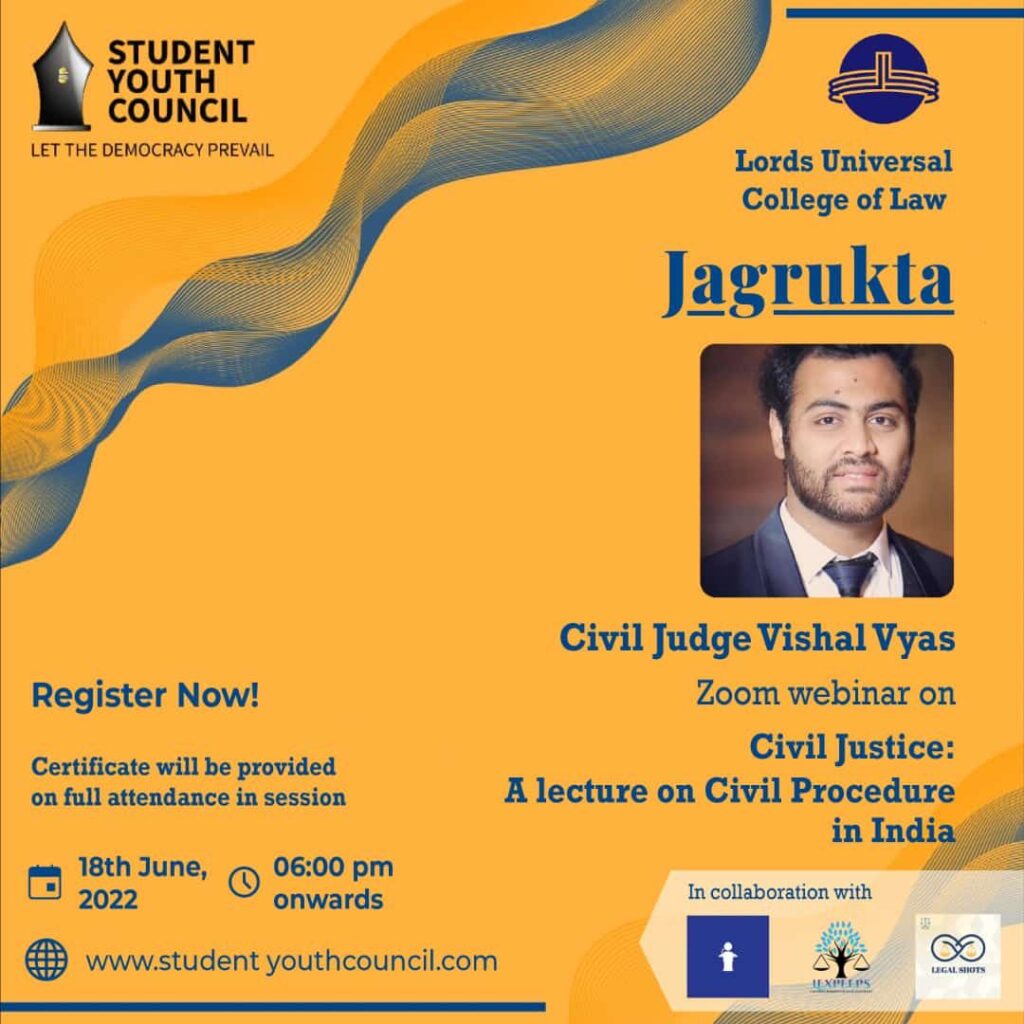
Student Youth Council in association with Lords Universal College of Law, Mumbai is presenting an informative Webinar focusing on Civil Procedures in India.

Topic

Civil Justice: A lecture on Civil Procedure in India

About Webinar

The Civil Procedure Code regulates every action in civil courts and the parties before it till the execution of the degree and order and ensures fair justice by enforcing the rights and liabilities. This enriching experience will be provided by Civil Judge Vishal Vyas to culminate how the procedure works and thereby give an insightful experience on the functioning of Civil Procedures in India.

Event Details

Date: 18th June 2022
Time: 6:00 pm
Platform: Zoom

PERKS

A participation certificate would be issued to all the registered participants

CONTACT INFORMATION

M: +91-9819683965

https://www.studentyouthcouncil.com/

REGISTRATION DETAILS

Kindly register for the webinar on the below link.

https://forms.gle/iRw1rwaxWz83vxkQ8

Disclaimer: All information posted by us on Lexpeeps is true to our knowledge. But still, it is suggested that you check and confirm things on your level.

WhatsApp Group:

https://chat.whatsapp.com/GRdQLsHRwmB7QVRmS3WK

Telegram:

https://t.me/lexpeeps

LinkedIn:

https://www.linkedin.com/company/lexpeeps-in-lexpeeps-pvt-ltd

Hina-Haneefa, a trans-woman files an affidavit in the Kerela High court, raising her voice against  Section 6 of the National Cadet Corps (NCC) 1948 Act which allows only males and females to enrol with the Corps.

WHAT IS CONTENTIOUS IN SECTION 6 OF NCC ACT?

This acts provides for the composition of a National Cadet Corps, which comes under the Ministry of Defence

Section 6 of the same lays out the enrolment criteria which are as follows:

Enrolment.—(1) Any student of the male sex of any university may offer himself for enrolment as a cadet in the Senior Division, and any student of the male sex of any school may offer himself for enrolment as a cadet in the Junior Division if he is of the prescribed age or over.

 (2) Any student of the female sex of any University or school may offer herself for enrolment as a cadet in the Girls Division: Provided that in the latter case she is of the prescribed age or over

Pertinently,  the act talks about the enrolment of only boys and girls, what is not to be ignored is the fact that this act came into existence in 1948, and the awareness regarding trans-genders identification as the third-gender and their rights came in somewhat later years, In the latest judgement, Navtej Singh Johar v. Union of India section 377 was classified as unconstitutional.

BACKGROUND

Hina-Haneefa, A student of Thiruvananthapuram University College, had gone threw two sex reassignment surgeries and procured a transgender identity card under the Kerala government’s Transgender Policy, 2015

She challenged NCC’s exclusion of transgender people from its programme in the college as she wanted to join NCC.

THE SUBMISSIONS MADE IN RESPONSE 

Kochi: In their submissions, The National Cadet Corps (NCC) informed the Kerala High Court that due to lack of any provision the transgender people cannot be allowed into NCC.

As per the existing policy, The divisions created in NCC as of now were only for girls and boys cadets, the NCC said.

The Central government told the Kerala High Court that

“There is no provision in the law allowing entry of Transgender persons to Armed Forces and National Cadet Corps (NCC) and it is the prerogative of the Central government to decide whether or not the same should be allowed

In fact, before creating a new division for the third gender, the Central Government has to conduct a major exercise in terms of reviewing infrastructure facilities, modules and facilities that are binding to such divisions. Any induction of a candidate not from male or female gender without due deliberations by the authorities would have far-reaching ramifications. The issue of raising a new division is a policy decision.

In their submissions, they pointed out that Hina has registered herself as a trans-woman in the college and she can’t apply for the post of NCC cadet in the capacity of a female.

It was highlighted that one of the primary aims of NCC was to groom cadets for a future with the Armed forces whereas, there is no provision existing for the entry of transgender people (female/male) in the Indian Armed Forces.

THE COURT’S STANCE

In one of the prior hearings of the matter, the Kerala High Court rebuked the Central Government for failing to formulate a policy to enrol trans persons with the corps. It had commented that the world has developed and the government cannot afford to remain in the 19th century.

Justice Devan Ramachandran, who was hearing the plea, had commented “Certainly there are three genders, male, female, and transgender. In this case the lady, the petitioner herein, has decided to assign to herself her gender as a woman and she has gone through surgery also. Nothing stops you from admitting her even under the NCC Act as a woman”

Isn’t it the government’s responsibility to protect the rights of the minorities be it trans-genders, religious or minorities in any other capacity, Judiciary has always come forward to play its role?