About the Advocate

Adv. Surjendu Sankar Das focuses on the practise of arbitration and litigation. experience managing numerous domestic and international arbitrations involving shareholder disputes, power projects, infrastructure issues, telecom issues, and other contractual conflicts. In arbitration proceedings before the ICC, SIAC, ICADR, and ad hoc Arbitral Tribunal, represented international and Indian clients. The Supreme Court of India, the High Courts of Delhi, Bombay, Andhra Pradesh, Kerala, P&H, numerous Trial Courts in India, CLB, APTEL, CIC, and other forums heard the case on behalf of the transactional corporation.

About the Responsibilities  

One Associate position with one year of PQE in litigation and arbitration is available at the Surjendu Sankar Das office.

Location

New Delhi

How to Apply?

Interested candidates may apply from here: – office@ssdas.in

Disclaimer: All information posted by us on Lexpeeps is true to our knowledge. But still, it is suggested that you check and confirm things on your level.

For regular updates, we can catchup at-

WhatsApp Group:

https://chat.whatsapp.com/G4bxdgRGHY8GRzOPSHrVwL

Telegram:

https://t.me/lexpeeps

LinkedIn:

https://www.linkedin.com/company/lexpeeps-in-lexpeeps-pvt-ltd

About the Responsibilities  

In New Delhi, the law firm of advocate Arjun Natarajan is looking for a young colleague.

As an associate you are required to: –

  • Litigation is the nature of the work. Illustrative functions:Drafting, Research, Filing and/or supervising filing, Assistance during hearing, Administrative work relating to cases.

Location

New Delhi

Openings

1

Remuneration

Competitive retainer and optional bonus to reward success.

Eligibility

  • Enrolled graduate of 2022.

How to Apply?

Interested candidates may apply from here: – r.officeofarjunnatarajan@gmail.com The resume should adhere to the following specifications and not go above two pages:

  • Types of files: read-only Portable Document Format and Microsoft Word Document
  • A4 size paper
  • Borders and gutter: 2 cm and 1 cm
  • Font size and style: 12 Garamond

Disclaimer: All information posted by us on Lexpeeps is true to our knowledge. But still, it is suggested that you check and confirm things on your level.

For regular updates, we can catchup at-

WhatsApp Group:

https://chat.whatsapp.com/G4bxdgRGHY8GRzOPSHrVwL

Telegram:

https://t.me/lexpeeps

LinkedIn:

https://www.linkedin.com/company/lexpeeps-in-lexpeeps-pvt-ltd

About the Organization

Sirius Legal is a Mumbai-based law firm that focuses on finding solutions and achieving results. Its 20–25 skilled attorneys represent customers in Mumbai, Thane, Pune, Delhi, Jaipur, Cuttack, and Nagpur. Our lawyers are in a wonderful position to understand the needs and expectations of customers and to achieve solutions with the utmost professionalism since they have a remarkable combination of litigation, corporate, and in-house experience. Sirius Legal currently offers financial institutions, corporate houses, start-ups, and individuals legal services in the fields of civil laws and white-collar crimes, as well as corporate secretarial services.

We often defend clients before numerous courts, tribunals, and other local authorities/forums in Mumbai, Thane, Pune, Delhi, Kolkata, Jaipur, Cuttack, and Nagpur thanks to the remarkable conflict resolution and corporate advisory experience of our team. Sirius Legal concentrates and specialises in giving customers complete, accurate, timely, and efficient legal advice and working with them to get the best results. In addition to educating clients on their legal rights and obligations, we also help them set reasonable expectations so that they may make well-informed decisions. As a one-stop shop for its clients, Sirius Legal places a premium on giving complete solutions as part of our service portfolio.

About the Responsibilities  

Three interns, two in person and one virtually, are now being sought after to join our Mumbai office in the month of October 2022.

As an intern you are required to: –

  • research and drafting, as well as assisting in the drafting of, petitions, pleadings, agreements and notices. The intern(s) shall also accompany the advocates to courts and tribunals.

Time Period

minimum 1 month, which is extendable subject to the performance of the intern and availability of slots.

Eligibility

  • Although third-year or higher students (for a five-year course) and second-year or higher students (for a three-year course) are preferred, a second-year student (for a five-year course) may also apply. Regardless of their course, first-year students’ applications would not be considered by the office.

How to Apply?

Interested candidates may apply from here: –

CV, along with a covering letter explaining their interests and reasons for applying for the position, to siriuslegaladvocates@gmail.com.

Disclaimer: All information posted by us on Lexpeeps is true to our knowledge. But still, it is suggested that you check and confirm things on your level.

For regular updates, we can catchup at-

WhatsApp Group:

https://chat.whatsapp.com/G4bxdgRGHY8GRzOPSHrVwL

Telegram:

https://t.me/lexpeeps

LinkedIn:

https://www.linkedin.com/company/lexpeeps-in-lexpeeps-pvt-ltd

Introduction

Before we begin with the comparative analysis of patent law in India with other countries, it is important to first know what is the meaning of “Patent” and the “Purpose” for which it finds a place in law.

The literal meaning of “Patent” is to hold an exclusive right or privilege for using or selling some product or invention. It can be for a discovery of a new and functional process, machine, the configuration of matters, or something new and useful improvement. For example, A patent will be given for a technical or industrial process that casts rubber articles into something else by a mathematical equation and also involves a computer program.

The main purpose behind the enactment of the patent was to stimulate research in science, technology, and commercial advancement. It gives a monopoly to the inventor to exclusively use their ‘Patented Product’ and if some other person or institution wants to use it, they have to get permission first. In that case, some considerations are eligible to be imposed which also includes the prescribed period for using the patented product.

Indian Patent Act, 1970

Before this Act, there were many alterations and remoulding done in the field of ‘Patent Laws’. In British time, it was used to be governed by Act VI of 1856 which acknowledged protection for a period of 14 years. After that, it was the Indian Patents & Designs Act, 1911 which again underwent many refinements, and Indian Patent Act, 1970 was introduced. 

In 1999, it was again amended according to the TRIPS Agreement (Trade-Related Aspect of Intellectual Property Rights and then in 2002 and 2005. The 2005 Amendment introduced ‘Product Patent’. It sanctioned patents against all fields of technology incorporating food, drugs, chemicals, and microorganisms. It even included pre-grant and post-grant opposition.

What can be Patented

In Section 3 of the Indian Patents Act, 1970, nothing is written regarding what things are capable of being patented but it lays down the list that what cannot be patented as an invention under the Act. These are:

  1. Computer Programmes
  2. Mathematical Methods
  3. Scientific Discoveries
  4. Plant and Animal Varieties
  5. Biological Processes

The list goes further. Also, these exceptions are dealt with in Article 52 (2) and Article 53 of the EPC.

Analysis of Patent Law in India with EU

The patent law in India is heavily directed by European law as it got modelled on the British Patent System. But still, there are differences that reside when we begin to compare. India’s patent system goes for more quality patents and that is why the registration, rules, and regulations are strict whereas the EU seems to be less strict and hence requires fewer demanding processes. Some of the differences can be seen in the following cases:

  1. In terms of filing
    In India, the patent will be given to the individual who will first fill out the application form no matter at what actual date it was invented or created whereas in the case of the EU, whoever’s application reaches the Patent Office first will have a staunching claim.
  1. Requirement of ‘Best Mode’
    According to Section 10(4) of the Indian Patents Act, 1970, the best mode to carry out the invention should be written in the application whereas EPC does not contain such kind of requirement. There is no obligation on the part of the inventor to disclose the fact regarding ‘Best Mode’ in which it can be carried down. The principal requirement is to state the invention in clear and complete terms.
  1. Official Language
    In India, the applications for patents are accepted only in the language of ‘English’ but in EU, one can fill the application in ‘English’, ‘French’ and ‘German’. Also, EU accepts the translated version but it should be submitted within two months of submitting the application.
  1. Opposition Mechanisms
    Both India and EU have two criteria of opposition- Pre-Grant and Post-Grant. In India, third parties are allowed to enter and take part in the proceeding whereas in EU, third parties are prohibited from taking part in the proceedings. It is done through submission in writing.
  1. Special Protection Certificates
    In India, SPCs are not sanctioned and this found its influence from the case law of Novartis v. Union of India & Others.1 In this case, the Court denied the applicant’s claim to patent its drug which was already a refined form of another patented drug. But this is not in the case of EU. EU sanctions Special Protection Certificates through Regulation (EC) No. 469/2009.

Analysis of Patent Law in India with US

In US, the power to sanction patents is vested with the Patent Office. It gives protection for up to 14 years to those inventions that are “sufficiently useful and important” for the country and the citizens. It is different from the patent laws of India as:

  1. Provides a patent to the individual who first invented the invention and not to the one who first filled out the registration form.
  2. It provides a one-year grace period which means the inventor is authorized to showcase his publication for a time period of one year before filling out the application form for a patent. It is presumed that this one-year time period will not affect the rights of the inventor of the invention.
  3. In US, the principal requirement for sanctioning the patent to the inventor is that it meets the three conditions that are: Novelty, Industrial Applicability and Non-Obvious.
  4. Under the patent system of US, everything should be specified. That includes, written description about the invention and the manner and process it will be used in clear, concise, full and exact terms.
  5. US patent system also deals with the procedure of re-examination, which is not similar to the same as in India. In re-examination, any individual can challenge the validity of the granted patent in USPT Office with proper reasons and evidence.

Analysis of Patent Law in India with UK

The patent system in UK is governed by the UK Patents Act, 1977 and also from European Patent Convention. Here, if analysed UK Patent system is much more expensive than in India but it is very effective also in eliminating fake or flawed patents. In case of weak claims, threat actions and penalties are imposed. If we see, there are many similarities and distinctions too in patent laws of India and of UK. They are:

  1. Requirement of Novelty, Non-Transparency and Non-Obviousness both in India and UK.
  2. Under the Article 54 of EPC in UK and Sections 2(1), 29, 30 and 31 of the Patents (Amendment) Act, 2005 in India, the one-year grace period is not sanctioned to the patentees. If the individual makes his/her work published or exposed to common people before filing for the invention, he/she will naturally and unquestionably will lose future potential rights.
  3. Patent gave to the first person who fills the application form both in India and UK [In the US, it is different as the patent is given to the individual who has invented first not the individual who has first filled out the registration form.
  4. In UK, the patent for business method is not granted whereas in India, if the business method proves to resolve the technical problem and is naturally made, the patent rights will be given but not in the case of individual. [In USA, business methods are valid for patents as long as it is more than just the functioning of a conventional business process.
  5. In the case of Patent Application, it is similar, that is , they are eligible to be published 18 months after the date of submission, unless and until they have been issued.
  6. In UK, there is no re-examination process. If it is sanctioned, a time of 9 months will be given to opposing it. If found invalid, then it will be revoked from all the countries at the same time and if it is valid, then the person can continue to enjoy his/her exclusive rights. [This is different from US, where a re-examination process is present to submit the reason and evidence to the USPT Office to challenge the validity of the patent rights or patent sanctioning.

Analysis of Patent Law in India with China

If we observe, some things are very different in China from India. Like:

  1. The date of filling out the application form. In India, it is 9 months whereas, in China, 12 months is given from the date of priority.
  2. The official Language used is Chinese.
  3. Disclosure of information regarding the invention within six months of entering will not prevent its invention for the first time on an international platform that is in any way connected with the government of China like sponsored or recognized.
  4. The actual examination of the facts and information should be done within three years of filling the registration form.

Conclusion

Sanctioning patent to inventors encourages technical and business inventions. It motivates them to hustle and get exclusive rights which not only gives monetary benefits but also it is a matter of pride and recognition. Though some differences are present in the patent laws of different countries, as a whole, all of them do only one thing, that is – REWARD FOR INVENTION.


Citations:

  1.  (2013) 6 SCC 1

This article is written by Deeksha Singh, from Lloyd Law College, Greater Noida.

“Time is what you lack in any study. Evidence disappears one hour at a time. People and the environment can damage crime scenes. Things are shuffled, relocated, changed, and smeared. Organisms decay. Contaminants and dust are blown by the wind. Memories deteriorate with time. You go further from the problem as you get away from the problem.” (Maureen Johnson)

The aforementioned passage, which is taken from Maureen Johnson’s book “really devious,” may help explain why technological development in the area of criminal investigation is essential. It can assist in situations where a case cannot be resolved for a long time due to a lack of evidence, as well as in accurately and quickly resolving criminal cases. All you need is a promising lead. In this article, we’ll discuss how criminology and the criminal justice system might benefit from scientific development to better answer investigative inquiries. This field is referred to as “forensic criminology.”

INTRODUCTION 

Consider a scene of a crime. Blood on the floor, stuff scattering, and a dead body lying there. A person has been charged with the offense. He also disputes that. Now, several inquiries come up at this point. What might have caused the accused to kill the victim? How did he kill him? Is there any proof that the accused committed the crime? What was his mental state and what happened? At this point, criminology begins to play a role in determining the specifics and causes of the crime. On the other hand, science assists in drawing a connection between the facts and the evidence, delivering accurate, trustworthy, and objective information. Consequently, forensics and criminology are integral to criminal justice.

It is undeniable that society is undergoing significant technological change, and along with these developments, criminals have improved their methods of concealment. Additionally, since everyone has access to smartphones and the internet nowadays, the typical person has a greater understanding of science and technology. Researching many ways to commit a crime without being discovered is simple with the internet. The use of the dark web for illicit activity is even more worrisome because no information is left behind.

The development of technology has lowered the barrier to crime. However, the same hands might also aid in the crime investigation. A tool for better criminal investigation and justice administration, forensic science is made up of a variety of ideas, including biology, sociology, criminal psychology, DNA profiling, physics, chemistry, fluid analysis, handwriting analysis, and computer science.

HOW CRIMINAL INVESTIGATION USES FORENSIC SCIENCE?

The three fundamental principles of individuality, exchange, and progressive change form the foundation of forensic sciences. The principle of individuality states that every object, whether natural or manufactured, has a unique identity that sets it apart from other things and prevents duplication. DNA and fingerprint are two crucial examples of this concept. In a variety of criminal proceedings, fingerprints have served as evidence. 

In State v. Karugope (A.I.R. 1954 Pat. 131), the Patna High Court ruled that the fingerprint expert’s assessment was adequate proof of guilt.

Exchange principle: Edmond Locard established this principle by noting that “contact exchanges traces. It simply suggests that the offender either leaves his traces after a crime has been committed or picks them up. In situations where a weapon is used, it leaves its mark on the victim’s body. If the two parties get into a physical altercation, the perpetrator may leave DNA traces on the victim’s fingernail or hair strands. The relationship between the victim, offender, and evidence is established by forensic science.

Ballistic fingerprinting connects the bullet casings to the weapon used to fire them. Used condom sperm aids in the capture of the rapist. It is possible to match the suspect’s teeth to bite marks on the body. In situations where a weapon wasn’t available, the type of wound can reveal the type of weapon that was used. Blood, footprints, narcotics, and just much any other material found at a crime scene can be used to infer information. Most likely, everything in criminal inquiry talks, not just the deceased.

Principle of progressive change: As implied by its name, this theory holds that everything undergoes progressive change over time. Time affects everyone and everything, including the offender and the evidence. Handle everything that might be proof extremely carefully. Blood samples, semen, hair strands, and fingerprints, for instance, must all be carefully obtained and inspected as quickly as possible to preserve their integrity and produce an accurate report. The sample’s quality must be preserved.

Other general principles of forensic sciences exist in addition to these three, such as the laws of analysis, comparison, and probability. According to these laws, a proper sample must be taken and examined, a sample should be compared to other similar samples, and all occurrences, whether they be certain or uncertain, are probable in nature.

THE FUTURE OF CRIMINAL INVESTIGATION AND FORENSIC SCIENCE

Future developments in forensic methodology have the potential to be extremely beneficial. Even though today’s forensic analysis is not perfect, future years may bring about more advanced methods. The criminal court system will see some significant advancements thanks to DNA analysis. Let’s look at some of the forensic technologies that will be quite useful in the future.

  • DNA phenotyping will bring about significant change in the field of forensics. This method enables the creation of a person’s portrait just from a DNA sample. Physical characteristics including skin color, hair color, height, eye color, face shape, and occasionally even weight are determined by genes. Numerous characteristics of a person are stored in their DNA, which experts claim might even reveal a person’s geographic ancestry. However, DNA does not carry certain characteristics of the human body. DNA phenotyping is still being studied, and if its validity is shown, it will represent a significant advancement in criminal investigation.
  • Sperm degradation in a used condom: A man’s sperm contains DNA. Therefore, it is possible to determine the time the rape occurred using the DNA contained in a used condom.
  • Bacterial signatures: Studies are being done on the bacterial traces that individuals leave behind on many surfaces, including the air we breathe. According to scientific investigations, everyone-specific bacteria live in large numbers in human bodies. These bacterial samples can be extracted from the suspect’s faces and compared to traces discovered at the murder scene.
  • Fingerprints: Since a very long time ago, people have been recognized by their fingerprints. However, there have been instances where they have resulted in erroneous convictions, suggesting that they are not perfect. Recent research, however, has revealed that several chemicals, including proteins and fats that are consumed as part of a person’s diet, are secreted by the fingertips. In the future, these objects might also be able to reveal the nutrition of the person whose prints are being studied. However, investigators aren’t currently employing such cutting-edge techniques.

Conclusion 

Based on the discussion above, it can be concluded that DNA will play a significant role in forensic sciences in the future. In many parts of the body, DNA is present. It can be extracted from samples of blood, skin tissue, saliva, semen, nails, hair, and more.

Additionally, DNA evidence is helpful in situations where there are several suspects. In the future, computers and artificial intelligence might be able to determine everything about a suspicious area or person without the need for an eye witness based on location and other personal information, in addition to DNA. Future developments in forensics and artificial intelligence might be able to precisely determine who should be suspected and who shouldn’t.

There will still be many difficulties even though these developments will provide a roadmap for criminal investigations. Only professionals can determine if a technique has been followed correctly or incorrectly since judges lack the necessary depth of scientific understanding. These problems influence the court’s decision to take a conservative stance. Forensic science is a valuable instrument for criminal investigations, but it can only be used to its full potential if both the investigating police and the judges understand and value it as such.


References:

  1. Jus Corpus [Online][Cited: 9 September 2022] https://www.juscorpus.com/the-criminology-of-the-future-how-science-helps-us-to-examine-crimes/
  2. Legal 60 [Online][Cited: 9 September 2022] https://legal60.com/the-criminology-of-the-future-how-science-helps-us-to-investigate-crimes/
  3. Legalbites [Online][Cited: 9 September 2022] https://www.legalbites.in/criminology-of-the-future/

This article is written by Kanika Arora from Delhi Metropolitan Education (Affiliated to GGSIPU).

About Lexpeeps Pvt. Ltd.

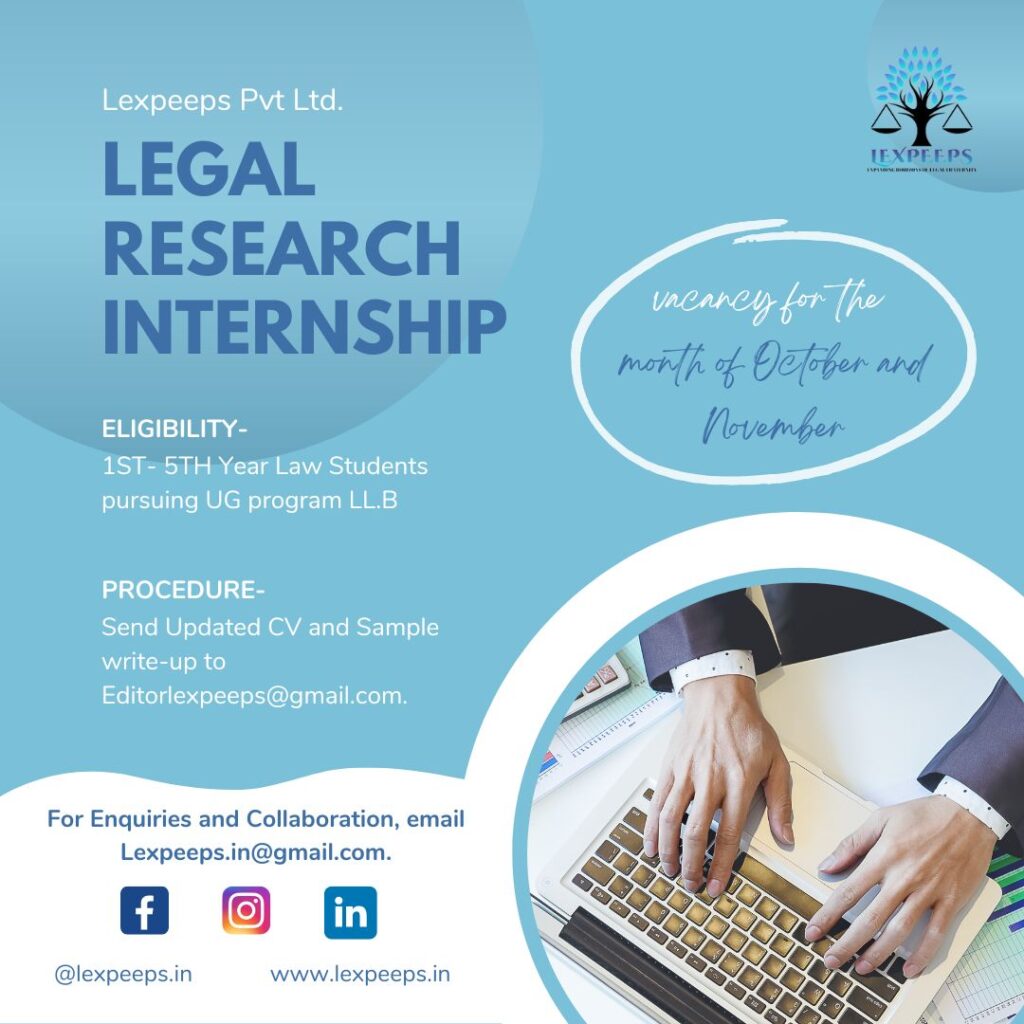
Lexpeeps Pvt. ltd. is an organization that works to assist and help law schools in organizing and managing their events. We’re seeking to provide young and dynamic law students with a platform to experience the legal world in their academic capacities. We organize different events where budding lawyers can experience the legal world. With a self-directed educational strategy and the guidance of industry experts, Lexpeeps also provide you with the recent happening in the legal world in the form of news, opportunities where you can find what suits you the best, articles to explore your interests, and many more.

Lexpeeps Placement Cell established in 2021 operates with a vision to ensure maximum placement of students studying in different law schools across the country. The sole purpose of Lexpeeps Pvt. Ltd. is to provide law students and law schools quality and to create value for the legal fraternity.

Lexpeeps Xcell is an Initiative of Lexpeeps Pvt Ltd to bring the practical aspects of law subjects to the desk of law students via personalized and curated courses.

Lexpeeps provides you with internships, where legal experts and budding lawyers come in touch with each other and grow by associating with the company. Lexpeeps Pvt. Ltd. has taken an oath to ensure the right of the student and to help them in every possible way so that they reach immense heights of success.

“Lexpeeps Pvt. Ltd. thrives on commitment and creativity”.

Responsibilities and Duties:

  • To research legal articles and draft an article.
  • To analyze different cases allotted.

Required Skills:

  • The Student should have good research and article drafting skills.
  • Must have relevant information about the allotted work

Eligibility:

  • The students currently pursuing their bachelor’s degree in law i.e., 3-Year LL.B. course or 5-Year LL.B. course from any recognized university/college in India.
  • A student pursuing their Post Graduation.

Mode of Internship:

Online

Perks:

  • Internship Certificate on completion of the internship.
  • Best Research intern of the month award.
  • Discount on paid events organized by Lexpeeps Pvt. Ltd.
  • Publication on Lexpeeps blogs
  • Live session every Saturday/ Sunday for our interns to boost their legal researching skills. (Optional)

Stipend:

None

For Applying, send your updated CV and a sample write-up to editorlexpeeps@gmail.com.

About the Organization

A group of like-minded lawyers who have joined forces to provide clients with their distinct specialised legal services as well as to create a separate vertical of counsel practise are known as “The guild.” It is a multidisciplinary law firm that emerged from the merging of the practises of its partners and important colleagues, relying on experience from top law firms.

About the Responsibilities  

For its commercial disputes department, The Guild is hiring.

Location

Defence colony.

Salary

5-6L p.a.

Eligibility

  • PQE of 3-4 years

How to Apply?

Interested candidates may apply from here: – delhioffice@theguild.co.in

Disclaimer: All information posted by us on Lexpeeps is true to our knowledge. But still, it is suggested that you check and confirm things on your level.

For regular updates, we can catchup at-

WhatsApp Group:

https://chat.whatsapp.com/G4bxdgRGHY8GRzOPSHrVwL

Telegram:

https://t.me/lexpeeps

LinkedIn:

https://www.linkedin.com/company/lexpeeps-in-lexpeeps-pvt-ltd

About the Organization

In keeping with its name, Sagus Legal is an embodiment of knowledge and wisdom, much like the sages. It is a law practise that offers thorough legal advocacy and advice to its customers. Our staff has experience in many different practise areas and is knowledgeable in many different industries. Our team brings with it a wealth of diversified expertise in representing clients in high stakes regulatory and business disputes as well as successfully executing some incredibly complex multijurisdictional transactions. We aid clients in deftly navigating India’s complicated legal and compliance landscape, from startups to some of the biggest commercial conglomerates and Navratna PSUs.

About the Responsibilities  

For its litigation practise, Sagus Legal is seeking two to three dynamic attorneys with 3-5 years of PQE.

How to Apply?

Interested candidates may apply from here: – careers@saguslegal.com

Disclaimer: All information posted by us on Lexpeeps is true to our knowledge. But still, it is suggested that you check and confirm things on your level.

For regular updates, we can catchup at-

WhatsApp Group:

https://chat.whatsapp.com/G4bxdgRGHY8GRzOPSHrVwL

Telegram:

https://t.me/lexpeeps

LinkedIn:

https://www.linkedin.com/company/lexpeeps-in-lexpeeps-pvt-ltd

About the Organization

Areness is a network of expert law firms and consulting businesses. with a focus on helping clients with business advice, the launch of new ventures, and daily problems. Our involvement in the professional services sector has multiplied over the past ten years, and we intend to keep growing even faster. The essential ideals of professional integrity and concern for society at large are sincerely upheld by our staff, who are committed and passionate about their work.
Areness collaborates with one of the top brands in the nation’s numerous industries and sectors, offering one of the broadest ranges of services with an internal team of professionals.
In addition to providing professional services, Areness is involved in legal research, legal education, and legal technology.

About the Responsibilities  

With the following abilities, Areness Foundation is offering internship opportunities:

RESEARCH: Gathering, analysing, and presenting data on important topics in public policy, law, the economy, human rights, the environment, climate change, and other areas of contemporary concern.

BRAINSTORMING: Fresh initiatives to pursue and strategies to broaden the foundation’s audience.

When necessary, COMMUNICATE with stakeholders to learn about their needs and demands.

SURVEYS AND VISITS: Surveys and visits to public and private offices are made in order to conduct empirical research.

Location

West Delhi/ Gurugram

Time Period

3 – 6 months     

Eligibility

  • Students in their undergrad, grad, and postgrad degrees
  • outstanding analytical and writing abilities
  • a desire to give back to the community or society
  • Can sign up right now

Perks

  • knowledge, education, and hands-on research and policymaking experience
  • Pay: Rs. 5,000 per month as a stipend (all inclusive)
  • Possibility of employment as a Research Associate full-time

Deadline for Applying

September 20, 2022

How to Apply?

Interested candidates may apply from here: – surbhirao@arenessfoundation.com

Disclaimer: All information posted by us on Lexpeeps is true to our knowledge. But still, it is suggested that you check and confirm things on your level.

For regular updates, we can catchup at-

WhatsApp Group:

https://chat.whatsapp.com/G4bxdgRGHY8GRzOPSHrVwL

Telegram:

https://t.me/lexpeeps

LinkedIn:

https://www.linkedin.com/company/lexpeeps-in-lexpeeps-pvt-ltd

About the Advocate

In New Delhi, Harshit Khanduja practises law before the Supreme Court and other courts and tribunals.

About the Responsibilities  

We are accepting applications for internships starting in October 2022.

As an intern you are required to: –

  • In addition to helping to produce briefing notes, counter affidavits, written submissions, special leave petitions, and other documents, interns will also be expected to do legal research.

Location

The Supreme Court’s Chamber in the morning and the office in Neeti Bagh, New Delhi, after court hours would be the places where interns must report.

Stipend

Performance-based stipend will be provided.

Eligibility

  • Since the majority of my cases are before the Supreme Court, those who are interested in Supreme Court litigation will be given preference. Candidates that are open to lengthier internship terms will also be preferred.

How to Apply?

Interested candidates may apply from here: –

https://docs.google.com/forms/d/e/1FAIpQLSfDybqkr0S5H3xlNZhuNxkv2sjjUGR2dZRwe0P963bjzLLI-w/viewform

Disclaimer: All information posted by us on Lexpeeps is true to our knowledge. But still, it is suggested that you check and confirm things on your level.

For regular updates, we can catchup at-

WhatsApp Group:

https://chat.whatsapp.com/G4bxdgRGHY8GRzOPSHrVwL

Telegram:

https://t.me/lexpeeps

LinkedIn:

https://www.linkedin.com/company/lexpeeps-in-lexpeeps-pvt-ltd